Do We Really Know That We Cannot See Everything?

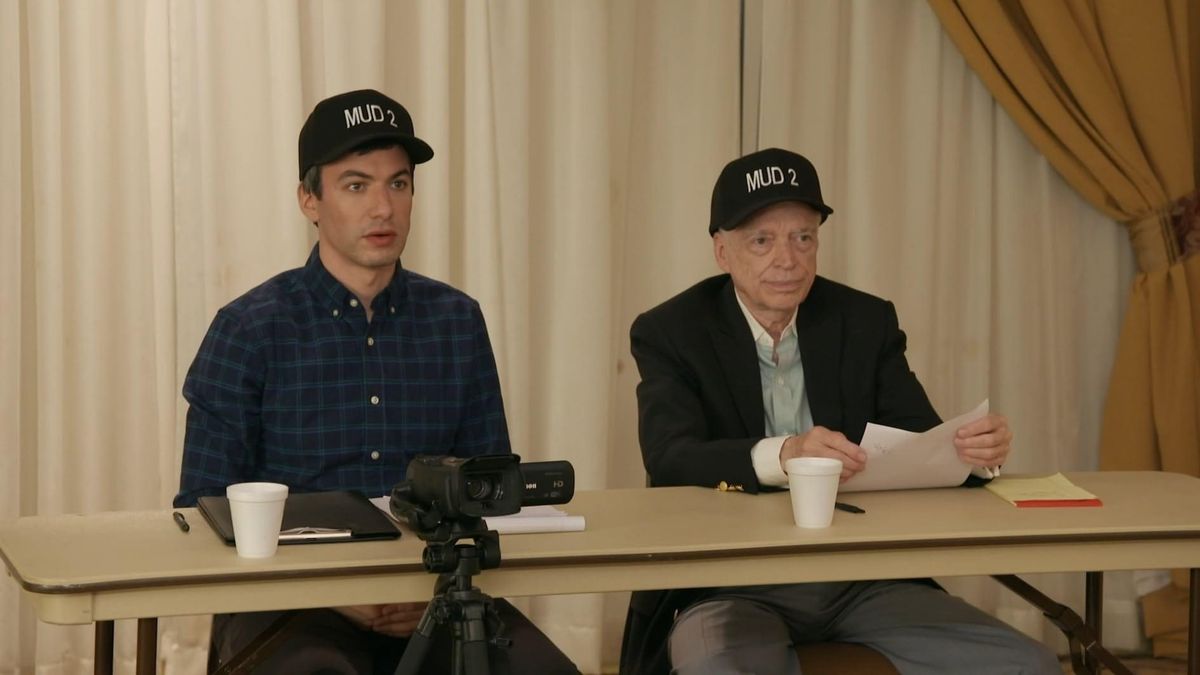
"The tragic and the ironic give way to a new value, that of humor. For if irony is the coextensiveness of being with the individual, or of the I with representation, humor is the coextensiveness of sense with nonsense. Humor is the art of the surfaces and of the doubles, of nomad singularities and of the always displaced aleatory point."
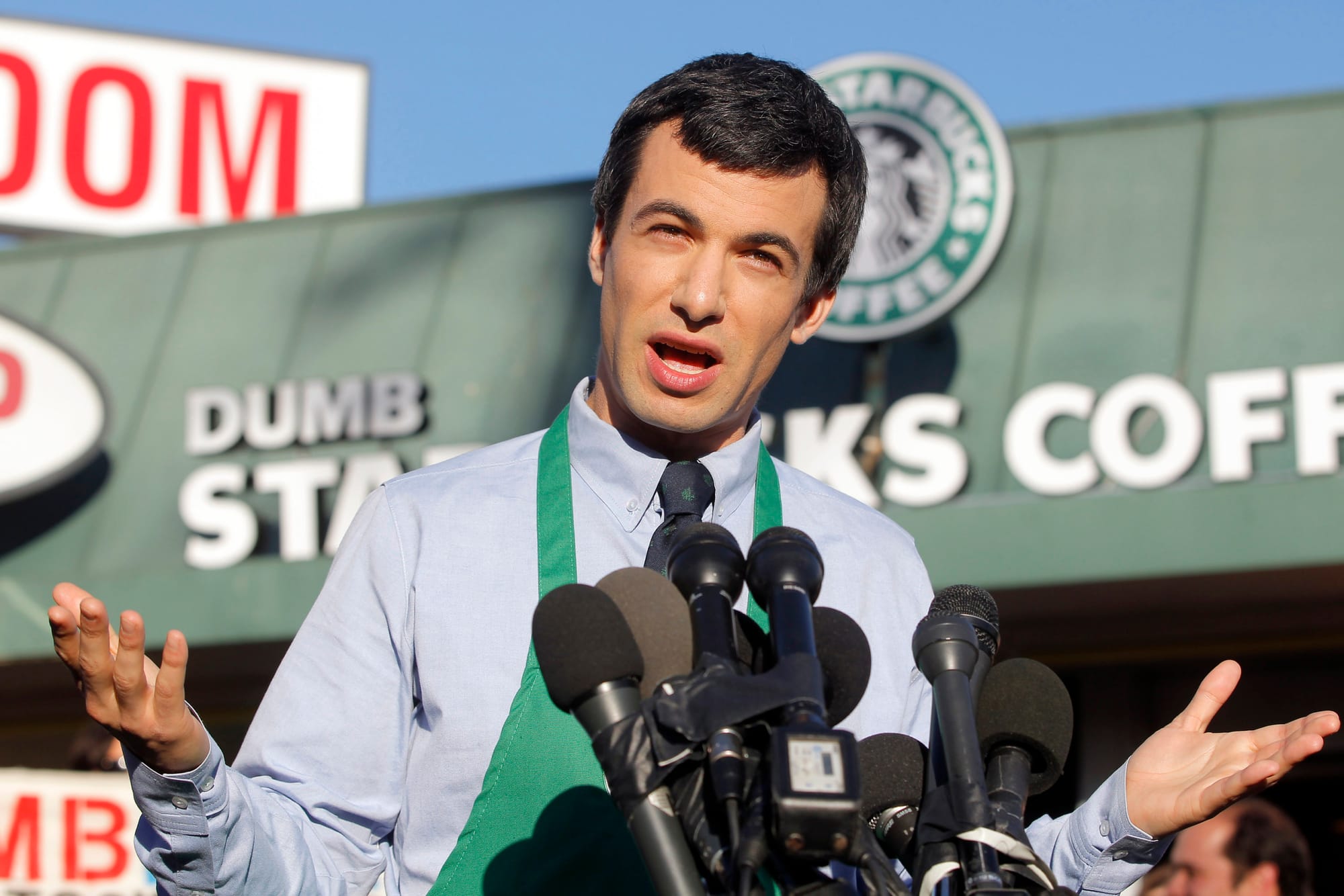
— Gilles Deleuze, The Logic of Sense
"You might as well add a question mark to the title and read it as sarcasm. 'You can see everything?' Because the moment that turns into a statement, I guarantee you're missing something... Even if they have good intentions, even if they are, like Fielder, 'just trying to be accurate,' it's not usually that simple."
— Chris Lambert, Film Colossus
I have not seen You Can See Everything. Within days of its October 2026 release, Nathan Fielder and Lance Oppenheim's 174-minute documentary sold out 2,000 screenings across 855 American cinemas, notched the largest US non-fiction opening in over two decades, pulled The Dropout back up Hulu's charts, and settled at 97% on Rotten Tomatoes. Audiences expect another takedown of Elizabeth Holmes before she reports to prison. Instead, Fielder films her final weeks of freedom, lets silence hang while she insists she never lied, and splits the second half between federal prison and staged reenactment. To read the reviews from afar is to hear a lesson in modesty. Adding an ironic question mark to the title ("You can see everything?"), critics walk away reminded that a camera crops reality and nobody knows what happens inside someone else's head.
I. 97% Fresh
Once opening-week reviews pile up, though, almost every one reads alike. That is stranger than ordinary herd journalism. When the documentary premiered at Telluride as a surprise screening, organizers locked critics' phones away, and pre-release embargoes later kept early reviewers filing copy before rival notices appeared. Working alone, writers still repeated the same line about how hard it is to know another person, while trade sites raced for clicks around an out of left field hit. Commercial reviewing runs on Stéphane Mallarmé's l'universel reportage, speech passed hand to hand like worn pocket change so an $18 ticket recommendation goes down without friction. Under a "97% Fresh" badge, confusion turns into boilerplate, handing an outsider everything needed to bluff through the conversation (a movie version, almost, of that book about how to talk about books you haven't read).
Backstory fatigue is the obvious excuse for why critics glossed over Theranos's crimes. When a poster on Reddit's r/TrueFilm complained that Fielder skips the fraud itself, commenters scoffed that expecting another forensic breakdown was like asking the 17th Batman movie to re-shoot Bruce Wayne's parents. Between John Carreyrou's Bad Blood, Alex Gibney's The Inventor: Out for Blood in Silicon Valley, a federal trial, and Hulu's The Dropout, audiences already knew the saga by heart. Part of that record, though, is how reporters fell for Holmes across a table. Bad Blood catches Fortune writer Roger Parloff interviewing her in 2014 under weird house rules: no photographs of the machine, and no calling it a device, only an "analyzer." Parloff liked to think of himself as a pretty good judge of character, Carreyrou notes, right up to the paragraph where he pronounced her "genuine and sincere."
Errol Morris had already proved how effortlessly filmmaker curiosity doubles as public relations. In The Inventor, leaked outtakes from 2016 Theranos commercials capture Morris settling onto the set with a folksy opener—"So, as usual, I have no idea what questions to ask or where to start." Watching the documentary in his 2019 Cineaste review, theorist Bill Nichols splits it in two: Gibney stays down in the lab's "tile world" of malfunctioning prototypes, while Morris glides upstairs through the executive "carpet world," letting his fondness for open questions read smoothly as company copy. Years later, as Eileen Jones recounts in Jacobin, Holmes went straight back to Morris to direct this film. When Morris asked Carreyrou to join a "he said, she said" inquiry into self-deception, Carreyrou turned him down flat. There were "basic facts," he replied, and those facts showed Holmes committed fraud.
Not that backstory alone explains the spell, since ignorance lands in the very same spot. British critic Mark Kermode walked into the screening having never heard of Holmes, never watched The Dropout, saw the documentary twice, and still came away calling it "a film about filmmaking" where "the confusion is the point." Pressed by his co-host on whether Holmes deserved 11 years in prison, Kermode gently sidestepped—that wasn't what the movie was trying to settle, he explained, which left him "slightly withholding judgment." Seconds earlier, in the same breath, he had already brushed past Holmes's denials on screen ("she says all the way through I didn't... but she did"), treating the felony as settled business the moment the portrait turned personal.
That two-step is how the 97% consensus manages to sound humble without revising a single assumption. Treating another person's mind as sealed territory works like a circuit-breaker, keeping Holmes guilty on paper while the viewer enjoys the portrait with a clear conscience. In his conclusion at Film Colossus, Chris Lambert goes out of his way to stand in the dark alongside his readers—we never know as much as we think we do, he cautions, closing with David Foster Wallace's This Is Water parable about misjudging a stressed mother in the grocery line. Yet preaching humility never keeps him from claiming the last word. Across those closing pages, Lambert explains what the movie is "ultimately about," warns anyone who drops the question mark that "you're missing something," and hands down a blanket verdict over Fielder, Evans, and Holmes alike: "None of them are as guilty or innocent as the film makes them seem." Sharing the blindfold gives the critic room to lecture the crowd while smoothing fraud down into a bad day at the supermarket.
Mapping the film's mechanics doesn't loosen its grip either. Eileen Jones traces Fielder's silent waits straight back to Morris and recalls early film theory's faith that a giant close-up unveils "the soul of the sitter." She points to Ari Balouzian's thrumming score and "the ticking clock" of suspense thrillers, comparing Fielder and Oppenheim to Alfred Hitchcock for keeping viewers aware of the artifice while still working their emotions like "the most naive of viewers." For a socialist magazine, Jacobin puts up little resistance to A24's prestige campaign. Jones comes out swooning over the movie and urges readers not yet "in on it" to buy a ticket without delay. She goes on to ask whether a billionaire-courting founder might be "somehow, in some complicated way, an innocent" kept in "emotional bondage" by domineering men, wrapping that surrender in "Vertigo-like spiraling into undecidability."
A sharper critic still finds a way to turn discomfort into a homework assignment. Justin Joffe comes closest to seeing through the mirage when he notes that full access from seasoned PR operators proves nothing by itself. Echoing an observation from The New York Times's The Daily about an earlier Nathan for You stunt, he points out that Fielder's traps merely coax out belief "already there" in the crowd. Rather than linger with that admission, Joffe pivots toward civic uplift in his closing paragraphs, promoting Fielder into a tutor who leaves audiences "sharper, stronger, and more keenly aware of the times we're being bullshitted"—as though the trick were built to graduate better consumers.
Specialists bring their clipboards into the theater and emerge just as untouched. Film instructor Jonathan R. Lack watches all six of Bill Nichols's documentary modes run at once across the cut (participatory, performative, expository, observational, poetic, and reflexive). 90 minutes before the screening, he had gone through the RAADS-R autism questionnaire with his therapist while talking over The Rehearsal and "masking"—rehearsing how others talk and act to appear normal. Once the lights drop, Holmes checks boxes straight off that checklist, startling him into seeing himself in her. Wondering later whether she was playing on that sympathy, he retreats into "the depths of unknowability of the human condition." Psychiatrists push that dodge to its comic limit. On their PsychoFarm podcast, two clinicians recite the Goldwater Rule upfront—disclaiming access to anyone's private thoughts or mental health—and call the film a Rorschach test where "what you're seeing is yourself." They then spend 50 minutes examining "the characters" for borderline personality organization, primitive splitting, grandiose narcissism, and Kohutian twin countertransference.
Critics who reject the 97% praise still claim the same high ground from across the aisle. Freddie deBoer opens by plugging his own book on psychiatry, All In Your Head, before writing off the film's prison turn as a "bioluminescent lure" for coastal status-seekers, mocking everyone else's vanity while leaving his own spot unmarked. In The Guardian, Catherine Shoard condemns the movie as an extended vibes check and an insult to whistleblowers Tyler Shultz and Erika Cheung, assuring readers that Britain still knows how to tell minor fibs apart from felony red flags. In Time, Stephanie Zacharek reduces Fielder's method to making "others look foolish, a lot" and scoffs at his "faux-Kabuki irony." She then crowns Amanda Seyfried the saving grace of the picture—claiming that, unlike Fielder, the actress has "nothing calculating about her," an unwitting gag given that she won an Emmy playing Elizabeth Holmes. Zacharek's dichotomy stands upside down. She excuses Holmes's evasiveness as "a kind of self-invented honesty," mistakes a working actor on set for artless warmth, and writes off Fielder as a cynic trading "depth of perception" for snark—missing how the film itself builds the divide she places her trust in.
Half a century of criticism about how cameras stage truth hardened into manners. Once skepticism turns into polite consensus chatter, confessing blind spots pulls attention toward the reviewer's modesty while keeping the verdict out of sight. Critics today are running Leo Strauss backward. Earlier writers tucked unpopular claims inside conventional pieties to slip past state censors; modern reviewers tuck rigid verdicts inside conventional pieties of doubt to get past their own conscience, changing none of their conclusions.
Every reaction across that chorus either climbs above the screen or tunnels underneath it. Moralists lecture from on high while clinicians and sympathizers search under skin and voice for an inner life rather than admit how ordinary the scam looks. Those evasions follow the three-way map in Gilles Deleuze's The Logic of Sense: vertical Socratic irony looking down from a balcony, tragic depth burrowing into dark caverns, and the horizontal surface of Stoic humor, where events happen strictly where bodies collide with words. Neither the judges on the balcony nor the diggers in the cellar linger on level ground, where Holmes's fraud already sits out in the open.
Mocking those critics changes little when the screen is already buried under press photos and trial recaps before the projector rolls. Nobody ever paints on an empty white canvas, Deleuze argues in Francis Bacon: The Logic of Sensation; inherited images already crowd the frame ("what modern man sees" long before he looks), and poking fun at a cliché only sends it back into circulation. Bacon breaks stock storytelling by piling clichés onto the canvas until involuntary "free marks" tear a diagram across the picture. Fielder runs that same disruption in the editing room, stacking familiar documentary posture until an abrupt splice—a fading end card, a muted phone call, a delayed ocean zoom—yanks the viewer inside.
II. A Decade of Setting Mousetraps
Reviewers who first meet Fielder in You Can See Everything miss a turn in American irony over the past decade that his television career tracks almost year for year. In a 2020 study, scholar Lucas Thompson read Nathan for You through Marshall McLuhan's idea of a "break boundary": push television's gimmicks past tolerance, and falsity flips inside out. Back in 2015, snark and detachment dominated cable; calling Fielder's schemes "intricate Rube Goldberg machines for generating sincerity," Thompson showed how an absurd stunt could rattle a business owner off balance until something unscripted broke through.
Ten years later, that dynamic inverted. Tech founders and public figures stopped hiding behind sarcasm and started burying criticism under therapy talk and nonstop confession. When machinery built to pry open guarded strangers walks into a household already running a sincerity factory of its own, Adam Nayman and Derek Thompson watch Holmes's corporate deceit collide straight with Fielder's staged conceit.
Arguing head-on rarely breaks an illusion because contradiction puts pride on the defensive. Invoking Søren Kierkegaard's maxim that an artist must sometimes "deceive people into the truth," Derek Thompson explains why indirection steps inside a speaker's premises until the floor gives way underfoot. Fielder's interviewing habits with Holmes follow that rule. In a 2014 Vulture interview, he traced his silences to breaking conversation's pleasantry state: where another host rescues a pause with reassurance, Fielder lets silence hang until whatever his subject tried to hide slips out.
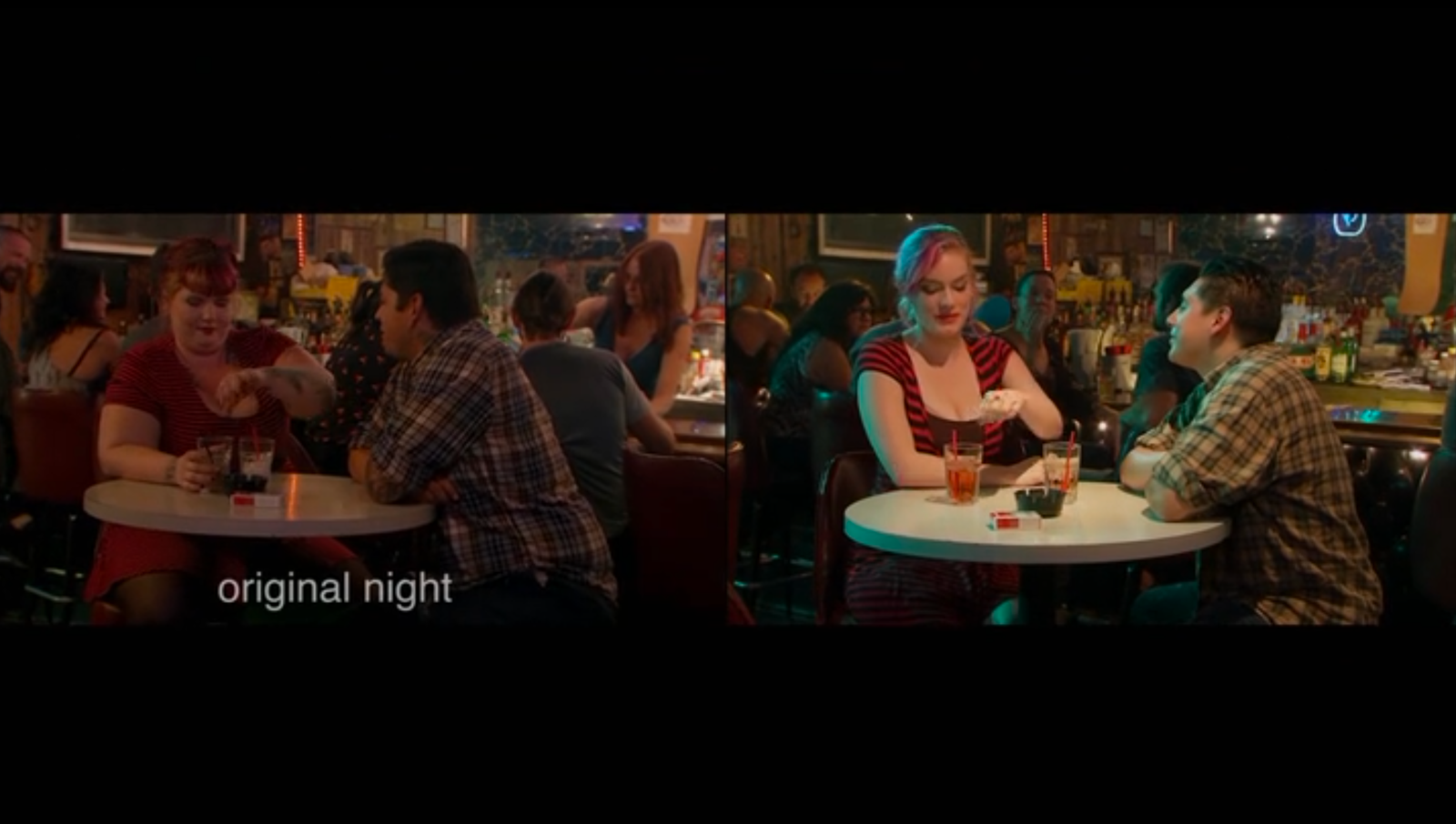
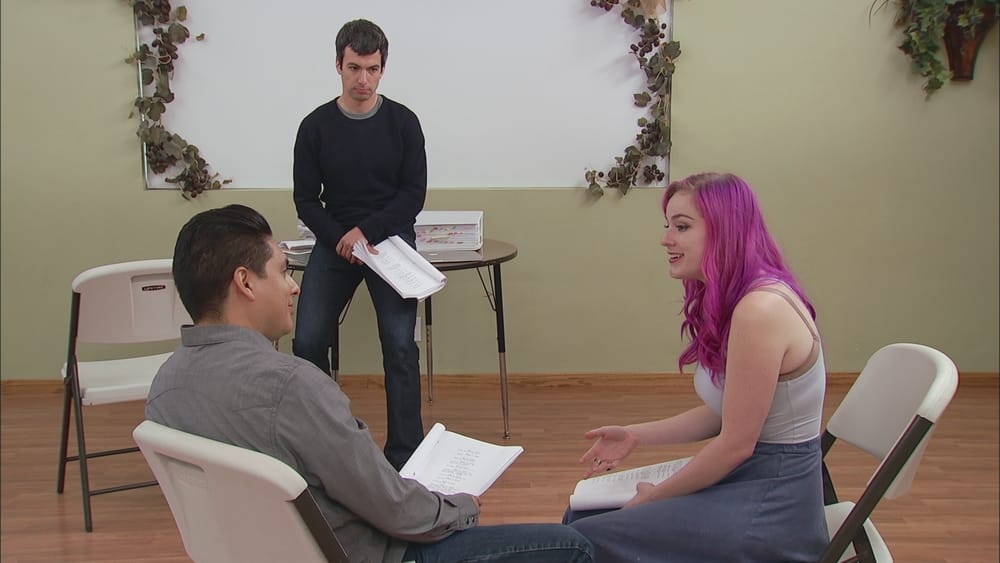
Years before filming Holmes, Fielder saw how rehearsed affection can slip free of parody. To bypass California's smoking ban at a bar called the 1881 Club in "Smokers Allowed," he posts notices turning customers into unpaid performers in a play watched by an audience of two. Encouraged when they praise it, he expands the stunt into ticketed theater: stenographers transcribe one night's chatter—small talk, three-way selfies, a skateboard deck's stress test—so a paid cast can restage the evening word for word, while a hired player edges out owner Ellen Sancer as "Female bar owner." Yet during rehearsal for a booth scene between a couple, Fielder takes the man's seat himself and instructs his partner to hold eye contact and say "I love you" 11 times in a row. When Ellen later disapproves of the rerun, Fielder summons her stand-in to vouch for the feeling instead. "I know it's fake, but it feels really good," he says, and the double pushes back: "It's not fake... I loved it." Speak a cliché evenly enough, and it starts behaving like fact.
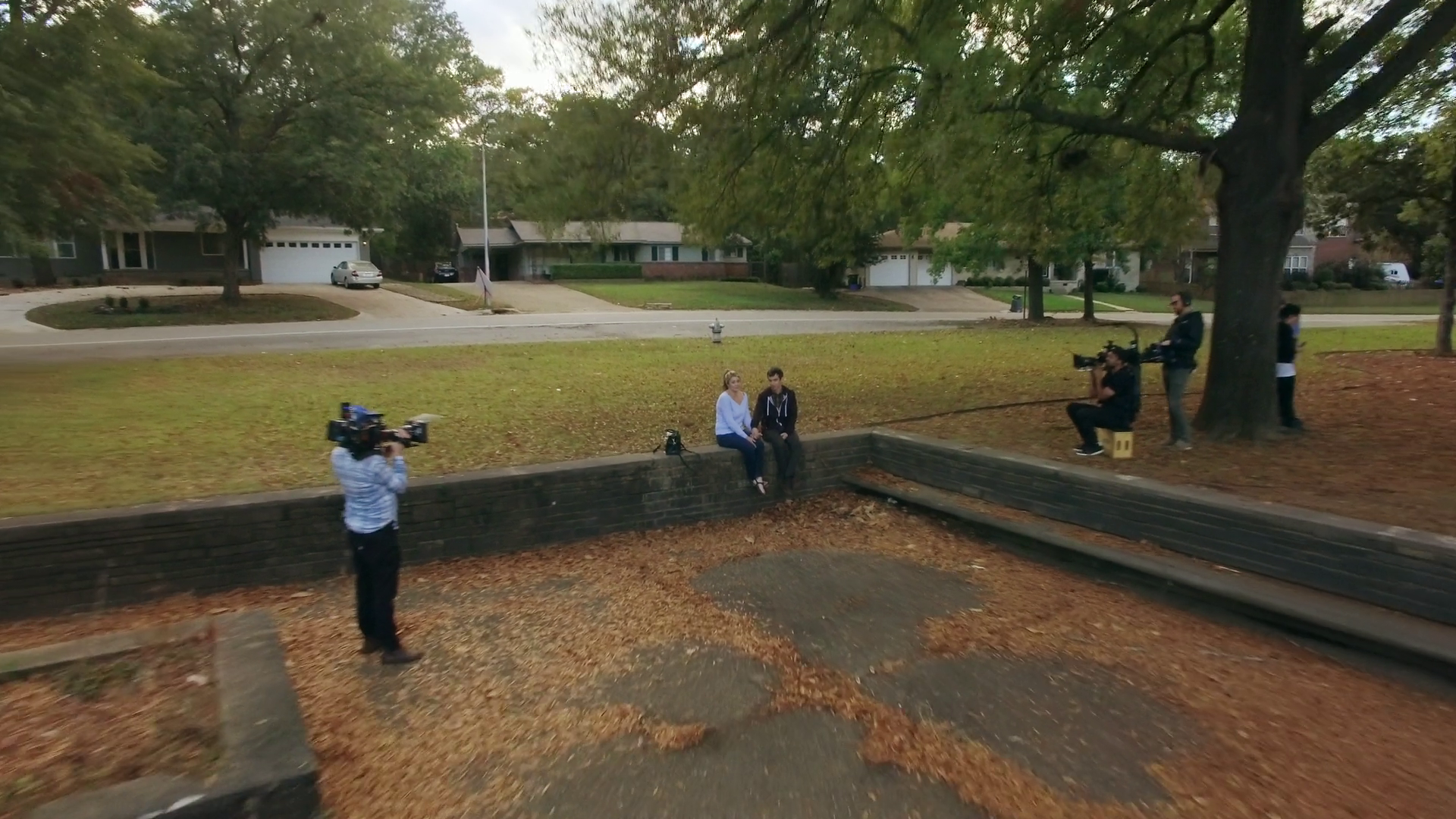
When Nathan for You closed with its two-hour finale, "Finding Frances," Fielder pushed that gap between fact and fantasy past comedy altogether. 78 year old Bill Heath—a self-billed Bill Gates impersonator whose own niece had no idea he did impressions—enlists Fielder's budget to track down Frances Gaddy, a girlfriend he lost touch with in his youth. Early in the search, Bill swears he will accept whatever life she has built; once an obituary and Facebook profile show her happily married in Michigan, he reverses course and insists he can break up her marriage. The truth reaches him only once he sits parked down her street and listens over the phone as Frances, now a contented grandmother, barely recognizes his voice. Even then, Bill declines to walk up to her porch without cameras, flying back to Los Angeles instead to pursue June, the actress hired to rehearse their reunion. Lucas Thompson reads that retreat through Cavell's divide between knowing a fact and letting it govern you. Bill hears that Frances has moved on, then still runs back to her stand-in—no different from a reviewer calling Theranos a fraud on paper while holding judgment back in the theater. Meanwhile, Fielder gets tangled in an experiment of his own. He had hired an escort named Maci to test how Bill behaved around women; when Bill balked, Fielder went on the dates himself and kept seeing her across Arkansas. In the closing shot, as they sit under a pavilion talking about meeting off camera, a drone climbs overhead and reveals the film crew circling them. Watching as a fellow director, Errol Morris praised the episode in The New Yorker as a new favorite exploration of love, recalling Ovid on "our unfettered capacity for credulity."
Season 1 of The Rehearsal turns that method on parental longing and guilt. Fielder reconstructs a Brooklyn dive bar and staffs a rented Oregon farmhouse with rotating child actors taking turns as one woman's fictional son, "Adam." The snare closes in the finale, "Pretend Daddy." When six-year-old Remy loses track of where the cameras stop and keeps calling Fielder "daddy" after a 9 year old takes over the role, Fielder tries to examine his negligence by building one more simulation. Putting the older boy in a wig to replay Remy's scenes, Fielder plays Remy's mother, Amber, opposite the child to watch his missteps from outside. Right as they agree the show never should have been shot, "Amber" breaks character and tells the boy, "I'm your dad." Even remorse converts cleanly into another take.
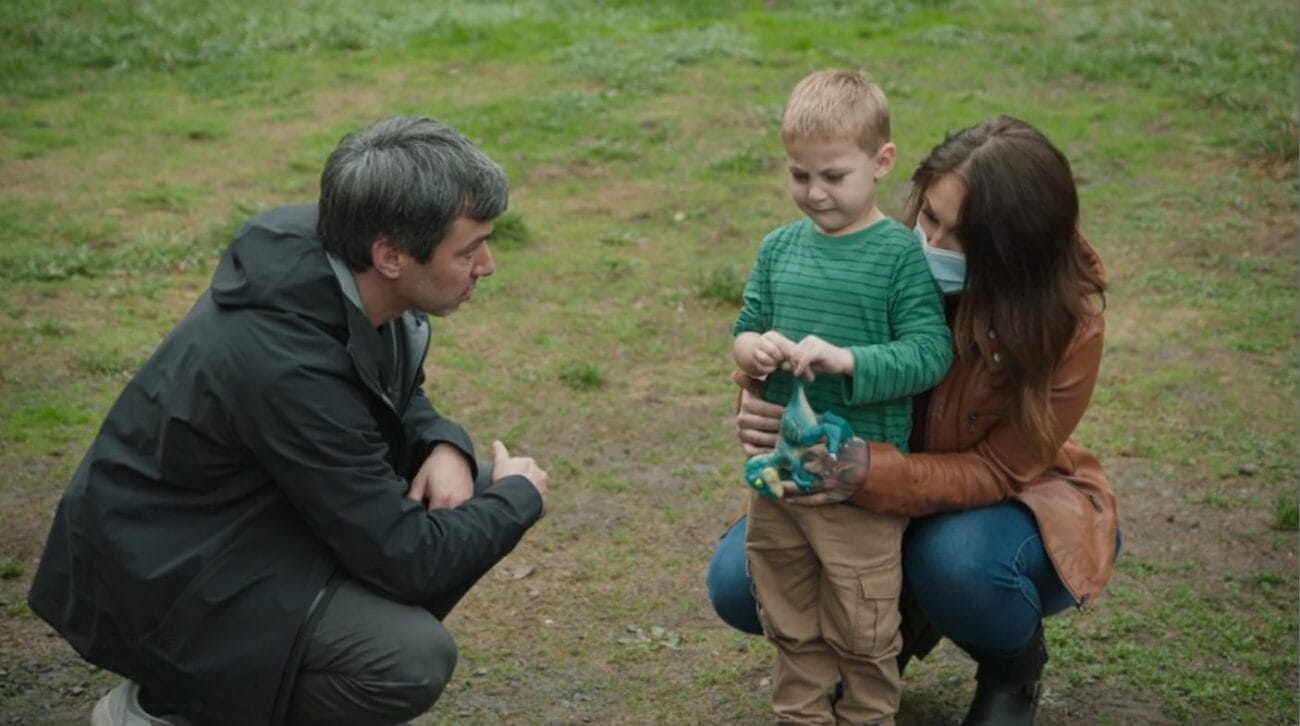
That hunger for fatherhood follows Fielder straight into You Can See Everything. Across Season 1, pacing his soundstages in a Connect-a-Desk laptop harness, he cradled an open computer against his chest like an infant—an image Nayman dubs "a MacBook in a BabyBjorn." Small wonder Holmes's off-camera flattery lands so hard. Fielder admits he kept chasing the project partly because she told him he "looked like he might be a good father," pulling a lonely director into rivalry with Billy Evans, whose easy tenderness around his two small children plays right in front of the lens. Fielder may not have fallen in love with Holmes, yet he really does seem to have wanted her to see him as a good father figure. Unlike anything staged on The Rehearsal, approval from an actual mother—and from a persuader skilled at telling men what they want to hear—gave him a stake he could not easily walk away from.
Season 2 of The Rehearsal opens on an aviation puzzle: why do co-pilots hesitate to correct domineering captains in an emergency? Pilots stay so guarded against approaching any talk of their feelings that Fielder spends the whole season scrambling before anyone gives ground. In "Pilot's Code," preferring to test his methods on animals before pilot volunteers ("we did evolve from them"), he finds a couple dismayed that three expensive clones of their dead dog, Achilles, act nothing like him. Fielder rebuilds their 2011 apartment, hires actors to play the couple round the clock, and waits until a puppy picks up Achilles's habit of walking along the back of the couch.
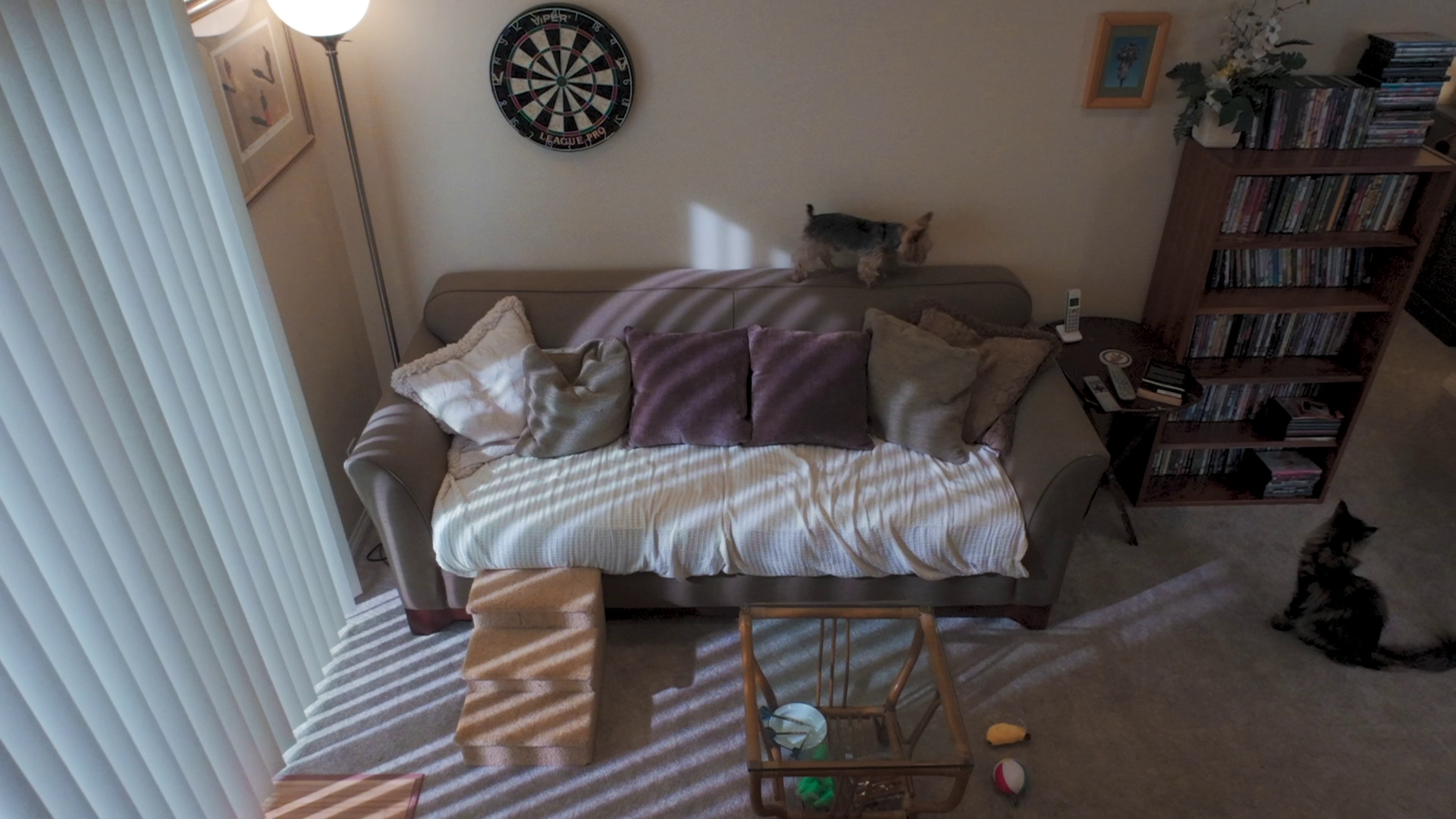
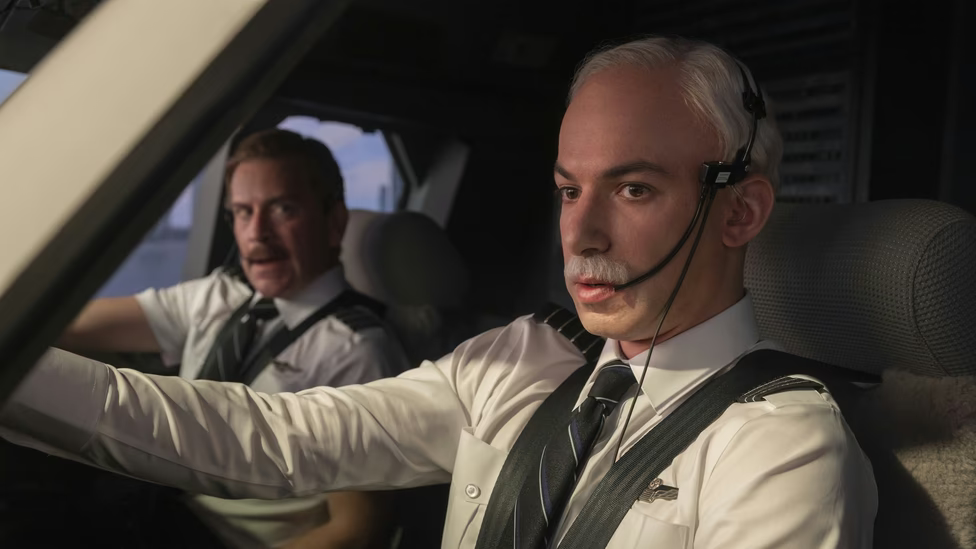
Taking that scrap as proof, he turns the same blueprint onto Captain Chesley Sullenberger. Shaved smooth in a bald cap and diaper, Fielder navigates an oversized nursery among lactating puppets and stilt-walking parents; scenes later, wearing Sully's gray mustache, he combs the memoir line by line, baffled that the hero never admits to crying and speaks only of finding ways to "cope." Only over drinks in a replica bar does another aviator finally explain why cockpit crews keep trouble to themselves. Reporting mental distress triggers an FAA medical review that costs them their license. Returning to the book with that clue, Fielder discovers that Sully mentions no music until his father dies, months before the first iPod goes on sale, and recalls the pilot's own iPod pulled from the flooded plane. Timing a 23 second pause on Flight 1549's black-box recording against a chorus by Sully's favorite band, Fielder concludes the captain learned to ask for help by listening to Evanescence's "Bring Me to Life."
Viewers coming out of You Can See Everything keep reaching for mental-health explanations to account for Holmes's blank stare and flat answers—speculating on autism or personality disorders as if a clinical chart could settle what sat behind her eyes. Fielder had already built the answer to that fixation in "My Controls," the Season 2 finale. Over two years off camera, he secretly earned a commercial pilot's license, loaded 150 hired actors onto a Boeing 737, and piloted them from San Bernardino to the Nevada border and back, an uneventful round-trip he tried to brand "The Miracle over the Mojave." Federal medical forms require pilots to disclose any history of anxiety or autism, either of which would ground the jet. Fielder took an fMRI brain scan to be sure, only to learn two days before takeoff that the results would take weeks; he signed the paperwork denying both anyway. Weeks later, ferrying empty 737s around the globe, he got a voicemail from his doctor saying the scan was ready and deleted it unheard: "Only the smartest and best people are allowed to fly planes of this size. It feels good to know that if you're here, you must be fine." Fielder never learns what the scan showed. For anyone trying to solve Holmes with a diagnosis, the finale shows how cleanly an act clears inspection while the chart stays shut.

Lucas Thompson closed his 2020 study by calling Nathan for You a "gift" confirming that human decency survives pressure and praising Fielder for handing judgment back to the viewer. You Can See Everything upends both claims. Fielder and Oppenheim told W Magazine they conceived the film inside the close-up room at the Magic Castle. No curtain separates magician from audience there; lamps shine inches from the deck, and staring straight at the cards lowers a mark's guard while the sleight slips past. Without a television editing suite or voiceover to shield him, Fielder looks exposed for the first time: Nayman finds him "sweaty and spontaneous, working on his back foot; there's no poker face." Across the table from Holmes and Evans—like "two thieves recognizing each other in the night," in the PsychoFarm doctors' phrase—he turns that close-up camera onto subjects raised on publicity. Yet he plays bewildered with the same discipline he brought to saying "I love you" 11 times in a bar booth or courting Maci in front of a hidden crew; viewers who walk out believing Holmes charmed a hapless director off balance forget who still controls the cut.
III. In Plain Sight
Face to face with Holmes, Fielder tests her claims against the hardware sitting between them. Playing a 2014 Fortune clip reported by Jodi Walker in The Ringer, he asks whether she still stands by telling the magazine Theranos built "a single device that can run any test." Whistleblower Tyler Shultz later noted that the machine wheeled onto the breakfast table was a prototype never used on patients, yet Holmes defends her wording through potential rather than performance. The box was a "platform" that "calls the cloud," she insists, capable of hundreds of tests once "chemistries" arrived. What a machine might do tomorrow covers for what failed on the bench today. That substitution reaches back to a 2006 demo in Carreyrou's Bad Blood, where cofounder Shaunak Roy admits to CFO Henry Mosley that the cartridge is "kind of a crapshoot" while staff replay a "recorded result" whenever blood fails. By December 2014, Holmes was handing Ken Auletta in The New Yorker the loop she hands Fielder nearly a decade later ("A chemistry is performed so that a chemical reaction occurs...").
In Fortune, communication professor Nick Brody calls that dodge "paltering": stating something defensible on paper to leave listeners with a lie. Pairing Holmes with her idol Steve Jobs demoing a barely working iPhone prototype in 2007, Brody points out that "words don't have meaning built into them"—when a founder talks about what a device might someday achieve, audiences fill in a finished machine. Behavioral economist Dan Ariely's polygraph study in The Inventor explains why questioning stalls once a speaker believes her own pitch. Lie detectors register tension between greed and conscience ("I want more money, but I think it's wrong"), yet when Ariely invited volunteers to cheat "for a good cause," "the lie detector stops working." Once guilt vanishes, earnestness proves nothing; as literary critic Robert Chodat observes, "'Sincerity' and 'conviction' pertain chiefly to the mood of an utterance, not to its content," so "one can be sincere or convinced about anything."
Fielder switches tactics with Abbott and Costello's "Who's on First?", and Holmes laughs along. Once he presses her, she admits she cannot pinpoint the confusion, prompting Evans to shrug that she "just thinks differently." Derek Thompson catches why she refuses the punchline: understanding it would mean granting that Fielder thinks her excuse is a joke. Later, Fielder compares her to David Blaine driving a steel spike through his palm, a stunt Mark Kermode remembers Fielder calling something "everyone thinks is a trick but it isn't a trick and that is the trick." Spectators search for sleight of hand when the wound itself is real. Holmes turns that same paradox into access. Moments after insisting she has never told a lie, she walks down to the water and texts Fielder, "FYI you can totally see everything," and he spots her out the window and replies with a thumbs-up.
Visibility under lights operates as control rather than proof. In The Transparency Society, Byung-Chul Han argues that "trust is only possible in a state between knowing and not-knowing"; once shadow vanishes, "the society of transparency is not a society of trust, but a society of control." Faces become commodities stripped of aura, trading in "exhibition value" until disclosure curdles into "the more visible than visible: obscenity." Because Han's aperspectival panopticon runs without Bentham's guard tower, subjects collaborate by putting themselves on display from every side at once. In Exposed, Bernard E. Harcourt compares that glare to Dan Graham's mirrored glass pavilion, where "one is not quite sure, looking through the glass, whether one is inside or outside, whether we are watching or being watched." Telling ourselves we have "nothing to hide," Harcourt warns, lets metaphors like "cookies" and "the cloud" pass off capture as weather ("We think it is nothing more than a cloud, but it is tattooed on our digital subjectivity")—much like Holmes insisting a box that never worked "calls the cloud."
Stand inside that glass pavilion long enough, and the film's title turns back on its reviewers. Critics hang a question mark on the title ("You can see everything?") because they assume an unreachable self hides behind Holmes's eyes. Under Han's glare and Harcourt's mirrors, the blunter possibility is right in front of them: you really can see everything. Twenty years of boardroom rehearsal and cameras trained on her face may have left no secret room underneath—only performance all the way through. Treating her psyche as an enigma then hands viewers their last excuse for avoiding someone made entirely of display.
Fielder works two fronts at once—jamming Holmes's speech while framing her face in 4:3—linking the arguments of Deleuze's The Logic of Sense and The Logic of Sensation. Just as Francis Bacon pens his figures inside a "parallelepiped of glass" so anecdote drops out and only "matters of fact" survive on "a single plane, viewed at close range," Fielder seals portraiture inside a narrow box. Bacon explains why sharper detail stops producing insight. Like painted newsprint whose typeface blurs out of legibility, precision works by "destroying clarity by clarity." Scrubbing at Holmes's CEO mask—what Deleuze calls the face, "a structured, spatial organization that conceals the head"—turns up no hidden confession underneath.
Psychiatry arrives at the same surface. Studying her constant smile and lowered voice, the PsychoFarm doctors group her with Helene Deutsch's "as-if" personality—"almost as if she's like a collection of research studies on what a CEO and someone should do to be powerful and develop trust immediately." Nothing waits behind the black turtleneck; the pitch runs all the way down.
Treating exposure as armor, Holmes and Evans go on offense from the start. Before shooting began, they left an estate for a smaller beachfront rental near San Diego suited to sightlines across rooms, while Lance Oppenheim dropped single-camera widescreen for Fielder's multi-camera 4:3 rig under cinematographer David Bolen. Across 34 days of filming, Evans strides naked out of the shower—what Nayman calls a "gotcha in reverse" and "a dick-measuring contest"—while days before prison Holmes works the phone pitching investors on a sensor and a laser. The couple turns surveillance back on the press. Asked about actors playing her, Holmes told The New York Times in 2023, "They're playing a character I created," admitting her image was an act. Before Fielder's cameras, she lies about being misquoted—claiming she said "they created"—while Evans swears they taped those talks themselves without ever producing a recording, leaving reporter Amy Chozick to defend her notes against tapes that never surface.
Most documentaries keep financial deals with subjects out of sight. Here, Fielder and Oppenheim turn contracts into plot. Because Holmes owes a $452 million restitution judgment, any check in her name faces seizure. Profiles routinely call Evans her husband, yet the pair never legally married, letting Evans hold Power of Attorney and steer negotiations while Holmes steps out of the room. Once filming resumes around his biotech startup Haemanthus, Evans polices the set like an executive: when an engineer begins suggesting Holmes misled Theranos staff, Evans kills the interview, provoking Fielder to drop his deadpan and snap back that directors choose the questions.
PsychoFarm and John Ganz (via Derek Thompson) both notice how neatly that division protects Holmes's split between innocence and enforcement outsourced to Balwani or Evans ("With some guys, you really can see everything," Thompson notes). Fielder and Oppenheim refuse to keep those deals offscreen. Early in production, they negotiated a profit-sharing agreement with Evans behind closed doors under an A24 contract that also gave them a "kill switch" to scrap the project; later, they drag the payout into the second half, casting Christopher Abbott and The Dropout star Amanda Seyfried to reenact the talks, pressing Holmes in prison on what she knew, and closing with a card noting Evans gave up his share before release. The reveal collapses Holmes's alibi without letting viewers blame Evans alone—and because the filmmakers held that agreement in reserve from near the start, every earlier hour of Fielder's patience reads differently once the ledger surfaces.
IV. The Spectator's Insides
Ninety minutes in, the movie snaps in two around what Nayman pairs as "the bars of a crib replaced by the bars of a prison." Federal Prison Camp Bryan locks Holmes inside Erving Goffman's "total institution" (as Harcourt maps it in Exposed), where discipline still relies on walls and molds. Stripped of any "backstage" to arrange a face, inmates in tan overalls undergo "the mortification of the self" behind a fence. Outside the gates, Billy Evans operates inside Deleuze's 1992 "Postscript on the Societies of Control," where enclosure gives way to modulation. Pinned under $452 million in federal restitution ("Man is no longer man enclosed, but man in debt"), Holmes sits inside a balance sheet while Evans keeps her likeness moving—licensing her image for billboards, picking fights on X under her handle, building an AI clone and a hologram from her voice, and pitching Haemanthus much like Deleuze's "new medicine 'without doctor or patient'" that trades bodies for "dividual" metrics. Scenes along the Pacific surf echo Deleuze's line that "Everywhere surfing has already replaced the older sports," splitting one couple between physical enclosure in Texas and continuous circulation online.
Cutting between those worlds scrambles any tidy attempt to sort subject from stand-in. In Texas, Holmes recedes behind prison rules while Evans seats a talking hologram at the dining table. Fielder drafts Amanda Seyfried, first filming her react to video of Holmes watching The Dropout, then casting her to reenact unfilmed conversations. What Harcourt traces from the 1560 imposture trial of Martin Guerre to the "new doppelgänger logic" of predictive feeds turns into flesh and footage here: originals and doubles fold into one "Möbius strip," each copying the next until nobody can separate performance from source.
Watching from the monitors, Seyfried takes on the role Deleuze calls the "attendant" in Francis Bacon's triptychs—a figure placed inside the picture to observe the scene, only to lose her neutrality halfway through. Brought in as a proxy beside the pre-prison tapes (Walker's "a more beautified us, the audience"), she refuses to stay clinical. She challenges Evans to his face, suspects Fielder of softening toward Holmes after catching him shift her reenactment script from "talking to you about it" to "talking to you about something," and presses him straight on whether he is protecting his subject—while Fielder answers, "I'm just trying to be accurate," in an echo of Holmes herself. Even so, an Emmy-winning actress taking direction from two filmmakers cannot pass for candid testimony. The film invites viewers to ask whether their surrogate caught the director slipping right on cue.
Across theatergoers' frame checks online, the final hour catches Fielder contradicting his own record. Beside a French press, he tells Seyfried that Holmes "didn't really drink coffee," though earlier shots through window glass show that same pot beside her laptop. He kills his microphone on a prison phone call when Evans warns about inmate transfers, though he had already filmed a Bryan speakerphone call without objection. He even seeds intimacy across the edit—telling Holmes he just went through a breakup, lingering a beat too long as they part before prison, and turning up late in the cut with a scab on the back of his hand like David Blaine's palm wound. Meanwhile, viewers matching the viral teaser against the feature catch exchanges spliced from unrelated takes.
Even the climax splits viewers right down the middle. Earlier in the film, Holmes invites Fielder to swim in the Pacific and he turns her down, while wide shots show distant figures bobbing offshore; only a slow zoom near the end reveals Fielder himself in the waves beside her. Romantic viewers conclude Holmes bewitched a lonely director, while Fielder loyalists dismiss the arc as a stunt by the character "Nathan." Both camps try to pry apart what the shot keeps fused. Fielder and Oppenheim clearly build the "susceptible director" storyline across cut, breakup call, and withheld zoom, yet staging that reveal still meant swimming out into the surf alongside Holmes.
Skepticism folds fastest around babies and closets. Critics trained for a decade to suspect startup jargon have no comparable reflex once the screen fills with nursery routine—what Byung-Chul Han calls "the tyranny of intimacy," where domestic clutter registers as raw feeling rather than another performance. Insisting in The New Republic that "there are no justifications or excuses for Holmes or Theranos here," Laura Marsh still melts before the tracking dots on Holmes's face for a family hologram, the crewneck sweater laid out on the bed, and the "pumped milk in the refrigerator for the baby." Watching Holmes walk the prison yard in tan overalls beside a toddler in "a gauzy polyester princess costume," Marsh pronounces the film "unexpectedly heartbreaking."
One final card locks deception and authorship into the same frame. Right before the credits read,
Nathan Fielder, played by, Nathan Fielder,
...two paragraphs share the screen, with Amy Chozick's defense of her Times reporting on top and Holmes's disputed claim ("They're playing a character I created") below. Only the top text fades. Left standing alone, "playing" cuts across acting and conning at once—meaning whether Holmes fooled Fielder, Fielder fooled Holmes, or both worked inside a cut shaped with Oppenheim, no clean line divides target from director. Viewers arriving at the end of 3 hours for a tidy verdict receive Maurice Blanchot's refusal instead: Un récit ? Non, pas de récit, plus jamais.
Return now to the unwatched screen. Analyzing Bacon's triptychs, Deleuze notes how modern painting tries "to eliminate every spectator, and consequently every spectacle," shifting the attendant's post away from onlookers inside the image toward "one who does not see, who is not in a position to see." As Karl Philipp Moritz observed, "the spectator is already in the spectacle." Outside theaters, ticket-holders who sat through all 174 minutes spill onto Reddit disputing who appears in the water: Holmes and Fielder, Holmes and Evans, or Fielder and Seyfried reenacting the swim.
Skipping the screening leaves me inside the spectacle too. Writing strictly from reviews and transcripts risks replaying the critics' dodge in reverse, treating an empty seat as proof of detachment. Every secondhand account still moves through Han's aperspectival panopticon and Harcourt's mirrored pavilion, where looking through glass blurs immediately into being watched. Under that glare, no vantage separates theatergoer, critic, and someone reading from afar. Nobody needs a ticket to see everything; insisting how little anyone can know is how everyone inside the glass avoids changing their mind.