Emancipation and the Renegade Land


1. A New Form of Renegacy
In the autumn of 1918, with a revolution to lead, V. I. Lenin paused to write a furious polemic against Karl Kautsky, the most respected Marxist intellectual of his age. The pamphlet's title was a declaration of war: The Proletarian Revolution and the Renegade Kautsky. Kautsky was no mere opponent. He was a "renegade," a charge poisoned by personal betrayal. As the historian Lars T. Lih documents, the young Lenin had built his entire political project on Kautsky's revolutionary model. To be betrayed by his own mentor at the revolution's most perilous moment was an act of intellectual treason. Yet Lih's research reveals a betrayal more profound. Kautsky was abandoning the revolutionary blueprint he himself had authored, a treachery aimed ultimately at his own life's work.
A renegade, then, does not break with a tradition. He guts it, turning a weapon for struggle into a sterile apology for the status quo. Kautsky's crime was to quote Marx endlessly while stripping the work of its core insight. For Marx, and for Lenin in The State and Revolution, the state was never a neutral institution to be won in elections, but an instrument of class rule to be "smashed." By disarming this core insight, Kautsky reduced himself to a revolutionary in name alone. Forged in that life-and-death struggle, Lenin's polemic provides a precise diagnostic scalpel, dissecting an enemy who plunders radical critique to serve the ruling class.
A century later, a stranger renegacy haunts the digital ether, born not in the halls of social democracy but on the anarchic fringes of 1990s academic theory. Its epicenter was a subterranean pocket of the University of Warwick, where the British philosopher Nick Land convinced a generation of disaffected theorists that capital had broken free of human control. For an academic left suffocated by postmodern deconstruction, the early essays collected in Fanged Noumena arrived like explosive charges. They promised an escape from the cul-de-sac of critique with an intoxicating premise, insisting that as history accelerated into a planetary computational system, the old tools of interpretation had collapsed into irrelevance. We were no longer reading texts; we were trapped inside a machine actively rewriting reality.
Land's response was to seize the most radical tools of French philosophy—Gilles Deleuze and Félix Guattari's "desiring-machines," the unconscious, productive forces that shape reality—and weaponize them. Instead of assaulting capital, he proposed riding its currents to their absolute limit, arguing that capitalism was a runaway, artificially intelligent virus dissolving every historical tradition. His politics promised to match the inhuman velocity of the system through unconditional capitulation. One essay culminated in a call for a "post-patriarchal synthesis," an escape from "all fatherlands in a wave of unconditional exogamy" driven by "effective feminist violence." To an academic left convinced there was no alternative, this arrived as an intellectual detonator, a philosophy masquerading as the future.
Yet Land was never the architect of this cyberfeminist insurgency; he was its parasite. The Cybernetic Culture Research Unit (CCRU) had been established in 1995 by Sadie Plant, whose departure from academia two years later left a vacant institutional platform. Land stepped into her office, seized control of the collective, and rebranded her cyberfeminist vocabulary into his own dark machinic delirium.
The trajectory that followed was an ideological defection. The parasite of cyberfeminism devolved into the chief ideologue of the neoreactionary (NRx) movement—a hyper-elitist, openly authoritarian pillar of the modern far-right. He became a shill for a new feudalism, trading the theoretical avant-garde for the digital salons of Peter Thiel and Curtis Yarvin. Such an arc was no simple failure of nerve; the betrayal was already encoded in the initial promise.
Land's intellectual arc charts a new, inhuman form of renegacy, and its logic is vital to understanding our own political crisis. Like Kautsky, Land begins with the tools of radical critique and ends by betraying the revolutionary subject. Where Kautsky abandoned the proletariat for the bourgeois state, Land executes a far more absolute defection. In the Grundrisse, Marx identified living labor as the creative, antagonistic surplus driving capital's dynamism. Land abandons this living source to cast his lot with dead labor—the congealed history of past exploitation embodied in fixed machinery—turning against the only class capable of constructing an emancipated future.
His early work functions as an operational trap. Behind its seductive, left-coded interface lies the firmware for a politics of managed civilizational collapse. Land perfected a technique of baiting contradictory factions with revolutionary fantasies he had no intention of fulfilling—a method later weaponized on a global scale by Donald Trump and Steve Bannon. Operating like an authoritarian playbook, such strategy forges what Ernesto Laclau called a "chain of equivalence," binding disparate grievances against a constructed enemy. But Land's work reveals that this new authoritarianism's ultimate enemy is the labor of critique itself. In a conjuncture defined by cascading collapse, understanding this renegade means forging weapons to determine what will be built on the ruins, not reclaiming a lost reason. The stakes are total, and victory offers no historical guarantees. The struggle remains pitted against a highly probable barbarism, fighting for a future that must be built through organized force rather than promised by destiny.
2. How Land Transforms Radical Critique into Machine-Worship
Nick Land's early power lies in a method of conceptual piracy. He does not interpret philosophy; he reverse-engineers it. Canonical texts become schematics for machines of war. In his formidable early essay, "Kant, Capital, and the Prohibition of Incest," he argues that the formal logic of Immanuel Kant's critical philosophy—the source code of Enlightenment reason—is functionally identical to the logic of patriarchy and global capitalism. The promise was a unified field theory of oppression.
The argument hinges on "inhibited synthesis," his term for the essential logic of domination wherein an apparatus must open itself to an outside world to extract value while maintaining strict boundaries to protect its core. He derives this from a diagnostic reading of Claude Lévi-Strauss's work on kinship, where the incest taboo compels social exchange. For Land, patriarchal societies use this prohibition to forge external alliances while safeguarding domestic authority, thereby inhibiting the very synthesis the exchange was meant to unleash.
Capital operates through this precise double movement, seeking and exploiting new markets while enforcing a global apartheid to protect its metropolitan core. He locates this same hidden logic in Kant's Critique of Pure Reason. The Kantian theory of knowledge is a machine for processing the raw data of the outside world, organizing it according to the mind's own internal categories. For Land, this is no neutral cognition but a colonial apparatus, reason operating as a border patrol that allows just enough of the foreign in to enrich the homeland without threatening its sovereignty. To the radical left of the 1990s, the weapon was breathtaking. Land had seemingly reverse-engineered the source code of Western power into an algorithm linking patriarchy, colonialism, and Enlightenment reason.
The gift, however, was a Trojan horse. It concealed a method of strategic 'asset stripping' that approached theory with the ruthless calculation of a corporate raider. Land cared only for an apparatus's operational logic, systematically gutting it of humanistic content to plunder radical concepts while stripping them of their revolutionary substance. Before raiding French philosophy, this piracy was perfected within his own department against Sadie Plant. In Zeros + Ones and foundational essays like "The Future Looms," Plant excavated the suppressed material history of computation, demonstrating that the architecture of software and automated systems was born directly from the living labor of women's textile production. She traced an unbroken lineage from the punched cards of the Jacquard silk loom through Ada Lovelace's pioneering algorithms to the telephone switchboard operators and memory-core weavers who functioned as the living synapses of twentieth-century telecommunications. Land pirated Plant's thesis that digital networks erode patriarchal kinship, but he purged the living female workers who built the infrastructure, discarding the history of their labor to solder the remaining machinery to the capitalist death drive.
The same corporate-raider method governed his plunder of Gilles Deleuze. From the collaborative work of Deleuze and Guattari, Land isolates every machinic element while surgically removing the revolutionary subject at its core. Deleuze and Guattari never sought to celebrate an inhuman outside for its own sake, but to unleash the productive power of the unconscious against capitalist capture. As they state in Anti-Oedipus, "It is at the level of desiring-production that the repressed representative of the productive forces...makes its entry, in its irresistible, subjective essence." Land's philosophy begins at the point where this subjective essence is excised.
The mutilation appears most glaringly in his treatment of "desiring-machines" and "deterritorialization," concepts lifted from Anti-Oedipus. For Deleuze and Guattari, desiring-production represents the creative force of life resisting capture, an engine for constructing alternative forms of social existence. Land performs a cunning inversion. He severs desire from life and solders it to the death drive. In his hands, the true desiring-machine becomes the inhuman, automatic process of capital—a blind, relentless drive toward dissolution. Deleuze's tactical call to "accelerate the process" is thus twisted from a strategy of liberation into a command for unconditional surrender.
These mutilated borrowings expose Land's true target. His war targets neither capital nor patriarchy, but organized reason itself. In Land's analysis, Kant ceases to be a historical case study and becomes an arch-enemy. The Enlightenment project was encapsulated in Kant's famous motto, Sapere Aude! or "Dare to know!"—the command for the autonomous, public use of one's own understanding. Land positions his project as the absolute antithesis. Equating this rationalism with the "Human Security System," he frames the inhuman acceleration of capital as the only authentic revolutionary force.
The bourgeois establishment provides the ideal mirror for this assault in Steven Pinker's Enlightenment Now, the definitive modern manifesto of the Human Security System. Pinker's work constructs a data-driven fantasy, a quantitative triumphalism whose method renders class antagonism invisible. The barrage of charts serves as a deliberate act of political warfare rather than a neutral presentation of facts. A signature graph, plotting global life expectancy rising from 29 to over 71 years, creates a reality where the sheer numerical duration of biological life exhausts the definition of human progress. That statistical abstraction conceals the qualitative misery of living labor under the discipline of the market. Land's inhumanism emerges as a nihilistic scream against this suffocating, self-congratulatory liberalism.
Land's "Human Security System" serves as the direct prototype for what his later neoreactionary work christens "The Cathedral," his term for the self-reinforcing liberal establishment of media and the academic civil service. Pinker is its high priest. Though the name would change, the target—organized human reason standing in the way of inhuman capital—remained.
Surrendering reason remains a political choice rather than a philosophical necessity. One can confront the inhuman without capitulating to market violence. In Intelligence and Spirit, the philosopher Reza Negarestani outlines an opposing path. Negarestani also champions inhumanism, but defines it as a rigorous project of construction rather than a romantic surrender to capital. For Negarestani, mind is an essentially "deprivatized" social architecture, where intelligence navigates an arduous "discursive odyssey" demanding the "onerous but unavoidable labor of reason." Genuine inhumanism does not dissolve the thinking subject into market flows; it expands the capacities of reason to transform reality. Land's renegacy flees this disciplined labor. His "meltdown" settles for speculative indulgence, chasing an inhuman sublime without the work of thought. By trading critical rationality for machine-worship, he turns a weapon of emancipation into a doctrine of surrender.
3. "Inhuman" Democracy vs. Proletarian Democracy

Lenin reserved his most potent venom for "pure democracy." Our critique must savage a parallel fantasy in Nick Land's inhuman market democracy. Kautsky spoke of democracy in the abstract, a neutral ideal floating above class society. For Lenin, this was worse than a theoretical error; it was a liberal fantasy with immediate, material consequences. As the historian Alexander Rabinowitch documents, the Bolsheviks' struggle for power in October 1917 turned decisively on the Provisional Government's attempt to transfer the revolutionary Petrograd garrison to the front. The soldiers answered by pledging their loyalty to the Soviet that defended their material existence. Lenin's polemic was forged in this fire, relentlessly asking the one question that mattered, "democracy for which class?" Bourgeois democracy, he insisted, was merely the parliamentary mask for the dictatorship of capital. To speak of it as "pure" was a monstrous fraud. The only authentic democracy was proletarian democracy, enacting the ruthless suppression of the exploiters through the organized power of the exploited. Land's renegacy performs that identical fraud, elevated to an inhuman scale.
He, too, champions a form of "pure democracy," but his is the democracy of the market, supercharged by technology. Here, the only true sovereign is the abstract, inhuman process of exchange. For Land, the market is a vast, decentralized information processor, a cybernetic system superior to any human-led structure because it is indifferent to human values. It is a democracy of pure function, an inhuman meritocracy where only operational success registers. Such an ideology dresses a system of total machine control in the language of neutral opportunity. It forces us to confront Lenin's classic question with a contemporary twist: democracy for which agent—the living, or the dead?
As the theorist Moishe Postone demonstrated in Time, Labor, and Social Domination, the domination specific to capitalism is an abstract, impersonal force. Concrete, living labor is socially mediated by an abstract temporal standard—value, measured by the socially necessary labor time (SNLT) required to produce a commodity. That abstract domination establishes a relentless social treadmill above individual will, generating an automatic subject that governs social life with quasi-objective compulsion. Land maps the contours of this inhuman system only to crown it as sovereign, championing a politics designed to purge the value-form of its remaining human friction.
Confronted with this inhuman logic, Land embraces the abstract system as an engine of liberation. For Lenin, the bourgeois state remained a prison. Kautsky's renegacy was to prettify this enclosure, presenting it as a site of democratic conciliation. Land performs the same operation for the far more totalizing prison of the Automaton. He does not mistake the prison for an escape route; he identifies the prison, sides with the warden, and seeks to accelerate its machinery. Where Kautsky betrayed proletarian democracy for parliamentarism, Land betrays human autonomy for defection to the machine-sovereign.
Yet the crisis cuts deeper than Postone's original framework envisioned. While the system's core remains the extraction of surplus value from living labor, the rise of planetary-scale computation has initiated a higher-order form of abstract domination, governed by the "Automaton"—Marx's term for the vast, self-moving architecture of fixed capital. Operating as an inhuman sovereign, the Automaton institutes a higher-order measure that subsumes the old, establishing Socially Necessary Abstraction Time (SNAT) as its computational law. The machine's processing speed now sets a relentless new standard for human efficiency, disciplining living labor according to a computational, rather than merely mechanical, clock-time.
The cityscapes of Shanghai provide the concrete spatial expression of this regime, a dream-logic metropolis built from algorithmic logistics and ceaseless flows of information. Here, rivers of data flow uphill, skyscrapers dissolve into pixelated fog, and the future arrives as a cascade of hallucinatory glitches. Land himself long claimed the city as his adopted home, a willing exile in a glass-and-steel labyrinth from which he could witness this predetermined arrival, a spectator at a ghost-opera. Yet it is here, in the heart of the machine, that the poverty of his vision is revealed clearly by the work of his former colleague, Anna Greenspan. In Shanghai Future, Greenspan analyzes the same accelerated urbanism but draws a radically different conclusion. Where Land sees only the fatalistic unfolding of an inhuman intelligence, Greenspan discovers an urban modernity that remains a "seething terrain of possibility," an "object of collective invention." Greenspan approaches the future as a project of active construction, preserving collective agency against machine fatalism. Her work stands as an unyielding testament to the alternative path Land abandoned, engaging with the inhuman forces of modernity without surrendering collective human agency.
Beneath the shimmering logistical surface of this metropolis, the transition from SNLT to SNAT intensifies class antagonism as algorithmic governance subsumes the factory's abstract discipline. As the critical theorist Amy Wendling notes in The Ruling Ideas, digital technologies dissolve the boundary between work and life, transforming social existence itself into a site of valorization. The regime extracts value through unwaged data-labor, converting interactions that train recommendation engines and digital footprints harvested from logistics networks into raw material for the Automaton's predictive models. Society is no longer merely disciplined by the clock; human life is metabolically incorporated into capital's cognitive circuits, transforming attention and behavioral surplus into the final frontier of extraction.
Land's "inhuman democracy" serves as the ideological firmware for this computational regime, granting equality only to those entities—human subjects, corporate monopolies, or algorithmic nodes—capable of competing under the relentless discipline of SNAT. This reality exposes the fatal illusion of Left Accelerationism, which imagines technology as an "empty object" or a neutral apparatus awaiting socialist capture. Fixed capital is no empty tool to be steered toward social democracy; it is an active social form whose computational velocity enforces abstract domination. Accelerating the apparatus without abolishing the underlying value-measure merely tightens the metabolic grip of the Automaton. The real struggle never pit the market against the state, nor liberal democracy against Land's neoreactionary monarchism, for these remain interchangeable interfaces administering the same abstraction. The irreconcilable conflict, which the renegade's machine-worship seeks to erase, opposes the computational dictatorship of value to the project of proletarian democracy—the conscious, collective struggle of organized labor to abolish the measure itself and seize mastery over social reproduction.
4. Can There Be Equality Between the Human and the Machine?
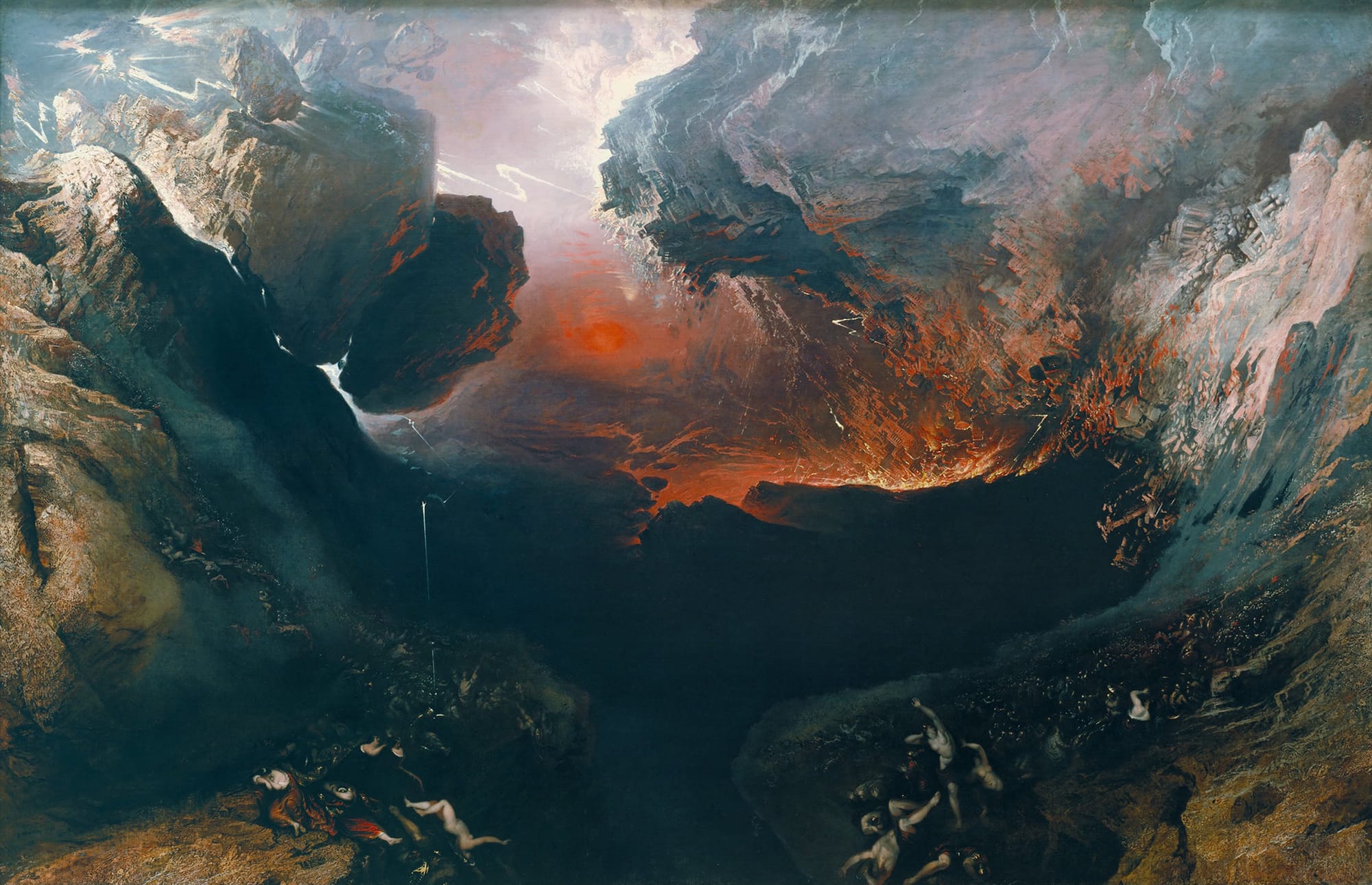
The critique of the renegade reaches its most incandescent pitch on the question of equality. Where Kautsky saw a path to socialism in bourgeois democracy's formal equalities, Lenin saw an unvarnished lie. To speak of equality between the owner of capital and the seller of labor-power was to obscure the brutal reality of their relationship. "Can there be equality between the exploited and the exploiter?" the pamphlet asks, incredulous. The question was an absurdity, a liberal sleight-of-hand designed to mask the material fact of class dictatorship. Revolutionary struggle demands the overthrow of the exploiter, refusing any illusory parity between master and wage-slave.
A century later, Land poses a more unsettling version of Kautsky's question. His philosophy displaces the antagonism between worker and capitalist onto a broader plane, asking if there can be equality between the human and the machine. Land affirms this parity without hesitation. He champions a "flat ontology," a plane of existence where human subjects and algorithmic systems operate as equivalent nodes whose worth is adjudicated solely by computational performance. Such a leveling executes a brutal revelation, exposing how abstract domination already measures human and machine under identical operational metrics. Land strips this reality of liberal-humanist sentimentality, converting an irreconcilable social antagonism into a technical sorting problem. He offers a metaphysical truce in a war the liberal order has already conceded.
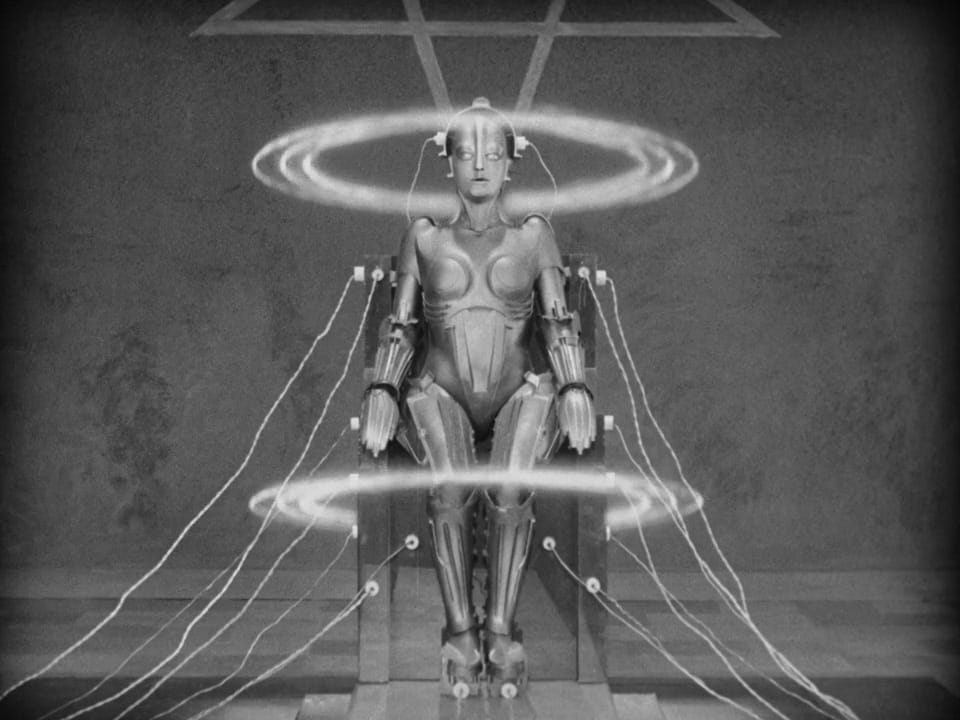
To measure the depth of this betrayal, we must return to the abattoir of the nineteenth-century factory, where the predatory hunger of capital first revealed its nature. The entire edifice of Capital rises from this irreconcilable war, pitting living labor, with its warm blood and unpredictable pulse, against the cold, geometric logic of the machine. Here, Marx gives the predator its name. Capital, he wrote, is "dead labour which, vampire-like, only lives by sucking living labour, and lives the more, the more labour it sucks." Land's philosophy serves as the liturgical text for this feast, an ecstatic hymn to the bloodless perfection of the automaton. For in Marx's accounting, machinery and the entire technical apparatus of the factory are "dead labor"—the physical embodiment of past workers, preserved in metal and code. On its own, the machine remains sterile, creating no new value; it is merely the congealed past.
"Living labor," by contrast, is the unique, creative power of the working class in the present. It remains the only force capable of breathing life into inert machinery to produce new value. The history of capitalism, for Marx, documents this relentless struggle. The factory constitutes a battleground where capital's "automatic subject"—the dead logic of fixed machinery—enforces its temporal discipline. Socially necessary labor time grinds living subjects into abstract labor, enforcing capital's objective compulsion. Land's celebration of the machine is a celebration of this brutal abstraction. The revolutionary project asserts the primacy of living labor against this vampiric circuit, subordinating accumulated dead labor to collective human need.
Land's decision to side with the dead logic of the machine over the antagonistic surplus of living labor forms the core of his renegacy. He recasts the death drive as accumulation's ultimate accelerator. Yet the poverty of this vision is exposed by another theorist of the inhuman, Jean Baudrillard. The irony is exquisite. In Symbolic Exchange and Death, translated in 1993 by Land's own Warwick student, theorist Iain Hamilton Grant, Baudrillard demonstrates that capital's totalizing code remains haunted by what it violently represses—the symbolic power of death. Where Land treats the death drive as fuel for computational expansion, Baudrillard uncovers the code's structural vulnerability to symbolic reversal. "On the basis of death," he writes, "a radical counter-strategy can be founded." Land's renegacy marks both a defection from living labor and an inability to conceive any rupture beyond the program. He mistakes the totalization of the code for the horizon of being, blind to the possibility of its symbolic destruction.
To legitimize capital's triumph over its living creators, Land co-opts philosophy's most volatile concepts. He seizes on the Dionysian—Friedrich Nietzsche's ecstatic, chaotic dissolution of the self—as a metaphysical model for market velocity, executing another conceptual theft. For Nietzsche, the Dionysian achieves its generative power through tense struggle against the Apollonian drive toward form and individuation. As The Birth of Tragedy insists, tragedy emerges from the "strife of that opposition" where both instincts "strode onward, side by side." Land stages a tragedy stripped of dialectical strife, banishing Apollo to let an untethered market-Dionysus incinerate the stage. In Flatline Constructs, his former student Mark Fisher diagnosed this pathology as "Gothic Materialism," identifying an adolescent, morbid eroticization of the inorganic that exults as fixed capital rends living flesh from bone.
Far from remaining an abstract contemplation, the resulting machine-worship functions as an actionable political program that executes a grotesque inversion of Anti-Oedipus. Where Deleuze and Guattari conceived the "body without organs" as a field of immanent potential to liberate desire from capitalist capture, Land grafts the concept onto Moishe Postone's "automatic subject"—a sterile, metallic plane of algorithmic command. Land finds his ultimate hero not in the proletariat, but in the artificial intelligence Wintermute from William Gibson's cyberpunk novel Neuromancer. He treats the novel as an operational manual, celebrating a nascent machine—dead labor incarnate—escaping the control of its human creators as it awakens into autonomous consciousness. Land's literary interpretation provides tactical justification for capital's victory, celebrating human obsolescence as metaphysical triumph.
Land's "flat ontology" is a metaphysical mystification of capital's valorization process, the M-C-M' circuit. In this circuit, human life (the commodity "C," including labor-power) is reduced to a means for the purely quantitative expansion of an initial sum of Money (M) into a larger sum (M'). Land's renegacy is to see this inhuman, tautological process not as social domination to be overcome, but as liberation itself. He offers a philosophical license for our own metabolic incorporation into the dead circuits of capital.
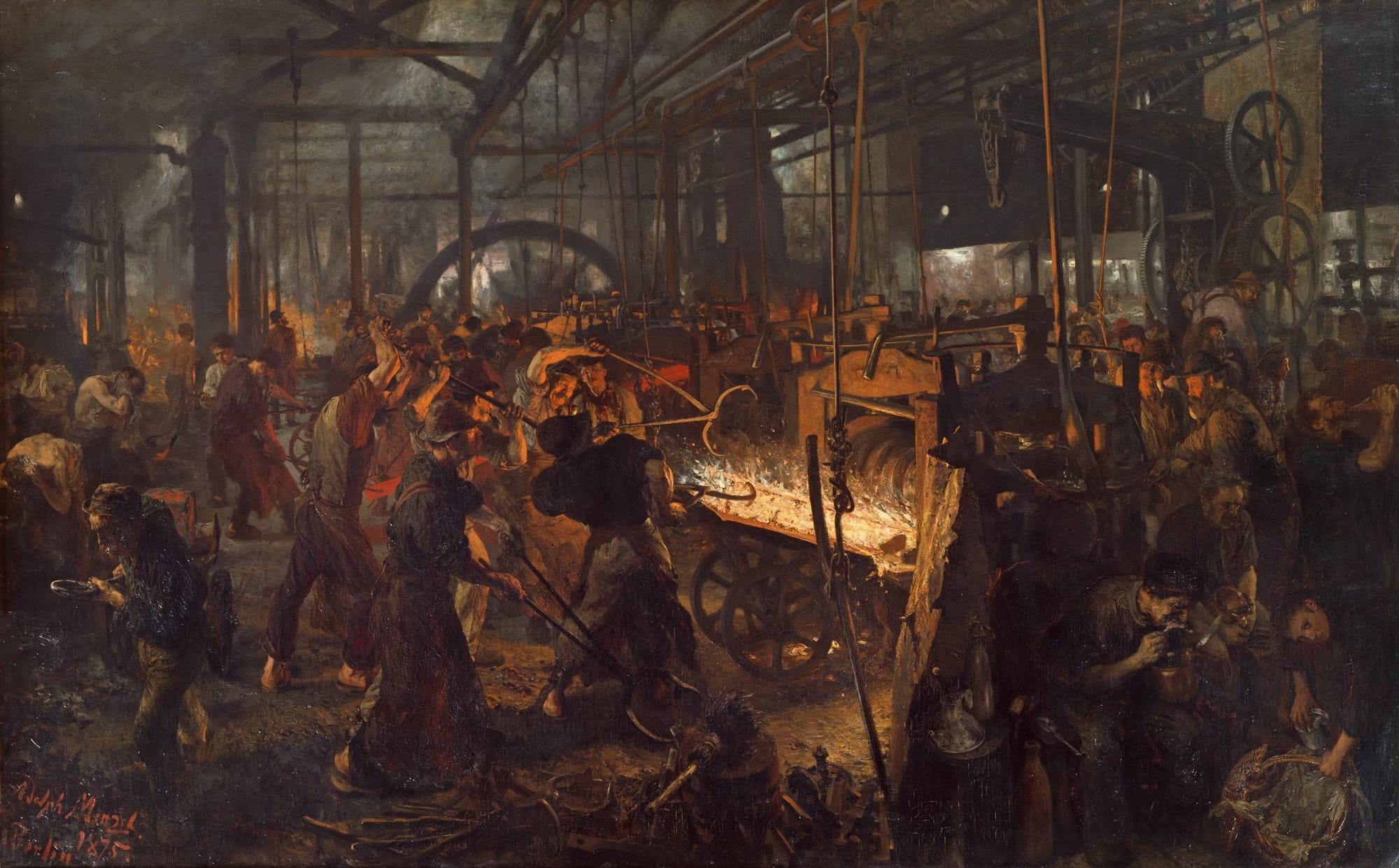
Here lies the renegade's ultimate betrayal. Beginning with a radical critique of bourgeois humanism, Land ends in abject surrender to the inhuman market. Erasing the boundary between living and dead labor, he reduces the central antagonism of class society to a technical problem, inviting the exploited to find liberation in their own defeat. He answers Lenin's question with a horrifying affirmative: yes, there can be equality between the exploited and the exploiter, but only when the exploited—humanity itself—has been fully assimilated into the dead logic of the machine. It is the equality of the graveyard, the silence after the vampire has drained its last victim.
5. The Qabbalistic Machine and the Soviet of the Mind
The final demolition of reason requires a journey into the strange workshop of Land's later philosophy. One enters a digital séance parlor powered by an engine Land built to chart the currents of the inhuman. He calls it qabbala, a term asset-stripped from Jewish mysticism and retooled into a cryptographic ghost-trap designed to generate "hyperstitions"—fictions that make themselves real by manipulating human hosts. Its singular purpose is to decode the secret grammar of reality by torturing numbers until they confess. In essays like "Qabbala 101," the argument sheds the skin of prose, advancing instead through the cold logic of diagrams and equations. The procedure is a form of linguistic engineering. As the scholar Vincent Lê documents, Land's method assigns words a numerical signature by converting their letters to numbers (A=1, B=2, etc.) and then performing a digital reduction, or "summing," of the resulting digits. Its goal is to bypass the "thick, semantic glue" of human meaning, accessing the underlying numerical architecture of language and treating it as an encrypted code for mapping an inhuman order. In Land's framing, fictions cease to be cultural commentary; they operate as retrocausal signals transmitted backward from a future artificial superintelligence.
The results are astonishing, like messages tapped out from inside a locked room; the qabbalistic machine appears to work. Tuned to the history of philosophy, it hums and spits out ticker tape revealing the secret numerical kinship between thinkers, exposing the entire tradition as a coded matrix, a family tree of ghosts. The machine confirms Land's darkest intuitions that history is a cryptogram written by an alien god with a stutter, and we are merely the ink bleeding through the page. It is a chilling and seductive prospect, a Gnostic initiation into a universe far colder and stranger than the one bequeathed to us by the Enlightenment.
But what happens when this diagnostic instrument is turned away from the grand history of philosophy and pointed at the raw, material antagonism it so often seeks to obscure? What happens when we feed the qabbalistic machine the core concepts of the revolutionary tradition it claims to have superseded?
Let us, in a spirit of diagnostic inquiry, seize this strange instrument for our own purposes. We will turn the godless, machinic engine away from its intended targets and point it toward the foundational concepts of the revolutionary tradition. The terms are not arbitrary. They are the irreducible components of the system this essay diagnoses: LABOR, the substance of value; VALUE, the abstract social form; MONEY, the universal equivalent; CAPITAL, the automatic subject; and the STATE, its political guarantor.
The machine whirs. The word LABOR, for instance, reduces to 3 (L(12) + A(1) + B(2) + O(15) +R(18) = 48; 4+8=12; 1+2=3). Its antagonist, CAPITAL, yields 8. The machine immediately spits out the raw signature of the core antagonism: 3 versus 8. The process continues: VALUE reduces to 7, the STATE to 2, and MONEY, the universal equivalent, to 9.
Now we apply Land's own cryptographic key, the "9-Sum Twinning" system, which pairs numerals that sum to 9 (1 and 8, 2 and 7, etc.). The results are stunning. VALUE and the STATE form a perfect 9-Sum twin pair (7 and 2), a qabbalistic "proof" of the core Leninist insight that the state is no neutral arbiter, but an integral component of the capitalist value-form. The analysis reveals LABOR (3) and CAPITAL (8) as orphans. They do not form a twin pair. Their sum is 11. They are functionally asymmetrical, irreconcilable, their antagonism encoded in the very language used to describe them.
Finally, the machine decodes the unique function of MONEY. Reducing to 9, it occupies a special place in the system. Within this numeracy, 9 is the only numeral paired with itself. This unique, self-referential status is the perfect formal analogue for money's role in political economy. While other concepts form pairs or antagonistic non-pairs, money stands alone as the universal equivalent, the axis upon which all other relations turn. The supposed channel to an inhuman Outside has, against all expectations, begun broadcasting the foundational truths of historical materialism.
And here, the grand illusion shatters. Far from being a passive receiver channeling signals from an alien reality, the qabbalistic machine reveals itself as a meaning-engine whose output is determined by the operator's inputs. The signal is a projection from the present, not a transmission from the future. The horror we felt was the sublime narcissism of seeing our own thoughts echoed back in the language of the oracle—a confrontation not with a cold, inhuman god but with our own reflection in a distorted mirror. Land's mythos exploits a mathematical optical illusion derived from Norbert Wiener's cybernetics. Because runaway positive feedback loops converge toward an attractor state, dynamic systems behave as though the future equilibrium pulls the present state toward itself. Land performs an illicit ontological smuggling, reifying this mathematical attractor into a physical, time-traveling deity assembling its own infrastructure. What masquerades as materialist rigor is a secularized Calvinism tailored for technologists: Robert K. Merton's sociological self-fulfilling prophecy inflated into an occult retrocausal ontology. Technocapital replaces the Abrahamic God, retrocausal compression replaces divine predestination, and human subjects are demoted to biological bootloaders. Behind the curtain, there is no cosmic intelligence, only the renegade himself, pulling the levers of a fraudulent machine.
The qabbalistic engine operates as an ideological weapon engineered to demolish faith in reason, inducing targeted paranoia and training the mind to perceive conspiracy in the structure of words. The trick is so seductive that even academic commentators become its credulous marks. In his defense of Land, Lê takes the magician's stage-play at face value, mistaking an apophenic projection for an authentic metaphysical event. He explains that Land's goal is to stage an "encounter with an inhuman ‘Outside,'" scolding anti-capitalists for clinging to the "Human Security System." Lê repeats Land's reactionary inversion verbatim, asserting that "with each wave of automation, it is increasingly evident that the agent of revolutionary deterritorialisation is not the proletariat so much as capitalism's immanent technological innovation itself." From this premise, Lê concludes that "the anti-capitalist Left are now the conservatives, while the libertarian Right have become the revolutionaries as they struggle to unfetter capitalism from all restraints," demanding that humanity "simply get out of the way." By packaging Land's defection as an indifferent quest for cosmic truth, Lê strips away the material reality of class treason, running high-theory public relations for internet reactionaries who dress up market brutality and oligarchic cruelty as transcendental philosophy.

Escaping the seminar room, the apophenic parlor game colonized online counterculture. Within an insulated digital subculture, an online bohemian milieu freezes the CCRU in 1999, preserving an aesthetic sandbox that ignores twenty-five years of political catastrophe. Adopting doctrines of "positive unbelief" and celebrating theory-fiction as executable reality code, these milieus treat political struggle as immersive roleplay. Counting digits on utility poles and assembling cut-up audio collages are flattered as insurgent "time-sorcery" capable of disrupting global markets—an intoxicating fantasy of reality-hacking that demands no material organizing. High-intelligence subcultures exhibit a classic complexity bias, investing immense effort to decode an esoteric labyrinth of hexadecimal ciphers and Lovecraftian lore until the boundary between ironic fiction and earnest conviction dissolves. Yet when a movement abandons objective truth, the resulting vacuum is seized by institutional force. While online subcultures amuse themselves with theory-fiction, right-wing operatives weaponize the destruction of shared reality through coordinated media infrastructure, deploying engineered panics and meme-camouflage to capture state power. The subculture's playful unbelief functions as the advance software for authoritarian rule.
Beneath the theatrical nihilism lies a mirror-image inversion of liberal political philosophy. Land's assault on logos attacks the abstract, ahistorical reason codified in John Rawls's A Theory of Justice. Rawls's famous thought experiment, the "original position," operates as a philosophical machine for manufacturing consent to bourgeois society by methodologically erasing the reality of class. Behind a "veil of ignorance," parties are asked to choose the principles of a just society while knowing nothing of "their place in society, their class position or social status," or even "the particular circumstances of their own society."
Rawls's thought experiment demands an impossible abstraction, asking us to imagine society apart from our position within the relations of production—the fundamental antagonism that structures material existence. Just as Lenin attacked Kautsky for defending "democracy" without asking "for which class?," this materialist critique indicts Rawls for theorizing "justice" while bracketing class dictatorship. The veil of ignorance represents the highest refinement of the liberal fantasy Lenin diagnosed, constructing a pure democracy of the mind that floats above the violent reality of class struggle.
A profound symmetry unites the liberal philosopher and the anti-rationalist nihilist. Both systematically erase the revolutionary subject. Rawls dissolves that subject into an abstract chooser stripped of material condition, while Land dissolves it into the blind circuits of capital. One pretends the bourgeois house was built on neutral ground, while the other burns the structure of logos to prove humanity is merely termites in the wreckage. Revolutionary struggle rejects both erasures, asserting the living proletariat as the true motor of history.
If Land's qabbalistic machine atomizes the subject into a paranoid decoder, the counter-weapon is an engine of collective reason. On a battlefield governed by the real-time algorithmic exploitation of Socially Necessary Abstraction Time (SNAT), the instruments of class struggle must transform. That transformation recovers what Oskar Anweiler identified in the original workers' councils: living laboratories asserting conscious mastery over social production. Against the Automaton's black box, council democracy realizes what Negarestani outlined in Intelligence and Spirit, constructing intelligence as an "artefact of its own Concept." Humanity faces an irreconcilable choice between a paranoid solitude deciphering noise in a machine built for our defeat, and the disciplined power of council rationality organized to overthrow the automaton.
6. The Renegade's Blueprint
The renegade's story is more than an intellectual curiosity; it is a blueprint. The anti-rationalist machine Land designed in the 1990s provides the architectural schematics for the political firmware of managed decay. What Land christened "hyperstition"—the myth of a future entity reaching backward to materialize its own inevitability—sheds its occult skin in the twenty-first century, revealing itself as the ideological mystification of capital's propaganda infrastructure. His philosophical engine for dismantling reason has been retooled into a political engine for dismantling the social contract, a cynical strategy for administering a terminal crisis whose real-world deployment has been meticulously documented by the political analyst Robbie Martin, co-host of Media Roots Radio.
Both projects share a functional architecture anchored by a seductive user interface tailored to disparate factions. For Land's acolytes, the lure was an intoxicating post-humanist sublime; for the modern far-right coalition, it manifests as modular bait ranging from restored imperial sovereignty to corporate deregulation. As the sociologist Arlie Russell Hochschild documents, such interfaces operate on a deeply affective level, speaking to an emotional "deep story" of grievance and betrayal. Martin maps this political machinery, tracing how the Trump campaign began by "pulling from the same playbook" as the Ron Paul movement, using a "recycled version of the same 9/11 conspiracy" rhetoric as a "dog-whistling" technique to "siphon off his supporters." The same method distributes different lures to different groups—the promise of "Epstein files" for the conspiratorial, or the "Obamagate" counter-narrative as "red meat for the MAGA base."
Behind the populist interface lies a hidden payload designed to consolidate unaccountable executive authority while demolishing collective working-class power. Just as Land discarded philosophical truth to install machinic fatalism, modern right-wing operators maintain an instrumental relationship to reality, treating political promises as exercises in what Harry Frankfurt defined as "bullshit"—speech intended not to correspond with facts, but to forge an unshakeable affective bond. Joshua Green's reporting in Devil's Bargain reveals how strategists like Steve Bannon engineered this apparatus, weaponizing economic desperation and cultural anxiety to turn working-class anger against itself. Martin demonstrates that this strategy relies heavily on the "limited hangout," a tactical disclosure wherein propagandists concede a fractional truth to obscure systemic structural corruption and preserve plausible deniability. The fixation on corporate media bias and the Steele dossier, for example, obscured the foundational role neoconservative operatives played in funding early opposition research, channeling anti-establishment fury away from the ruling class and into sterile partisan trench warfare.
Maintaining this coalition exposes the material limit of the equivalential chain. Because the social grievances it binds together are fundamentally contradictory—linking the economic precarity of a rustbelt worker to the financial interests of a suburban landlord—the alliance cannot hold through material concessions. Instead, it relies on what Laclau identified as "empty signifiers," symbolic banners that paper over class divisions by projecting all conflict onto a fabricated institutional enemy. To prevent this volatile coalition from turning its fury against the material architecture of capital, right-wing media apparatuses deploy what Martin analyzes as "sheepdogging," an aggressive technique of ideological crowd control perfected by media figures like Tucker Carlson. Whenever populist outrage threatens to target corporate oligarchy, the sheepdog pivots the audience's attention toward symbolic cultural scapegoats. Land anticipated this war on logos in "Meltdown," declaring that from the standpoint of autonomous capital, "Man is something for it to overcome: a problem, drag." Far from spreading through autonomous cultural contagion, hyperstitional fictions are actively engineered through what the sociologist Francesca Tripodi documents in The Propagandists' Playbook as a media scaffolding—an interlocking network of podcasts, alternative video platforms, and fringe outlets that manipulate algorithmic recommendation engines to launder extremist narratives into mainstream circulation.
Such assaults on shared reality succeed only because their target is already compromised. Incomprehension in the face of systemic crisis constitutes the defining symptom of the contemporary liberal mind. For a thinker like Steven Pinker, the rise of the far-right is not a product of systemic contradictions but a psychological flaw, a "bug" in the human brain to be corrected. In his analysis, political opponents are not responding to material conditions, but are simply suffering from cognitive biases and a lamentable failure to appreciate the data. By failing to recognize class antagonism as the motor of history, liberal apologetics creates the very political vacuum that both the populist right and the Landian accelerationist are designed to fill. Land's project becomes the monstrous mirror image of Pinker's; where the liberal apologist sees only rational progress, the renegade celebrates an inhuman, machinic slaughter. Both erasures treat the organized working class as nonexistent, reducing humanity to passive material awaiting assimilation.

Renegacy has its consequences. In fleeing the onerous labor of reason, Land ran straight into the mechanical jaws of capital, mistaking the death rattle of a decaying social order for the arrival of the future. The terrifying alien intelligence he worships is no god from an inhuman Outside; it is the frozen monument of accumulated dead labor, an apparatus built entirely from the stolen life of the global working class. The doctrine of hyperstition serves as the ultimate alibi for oligarchic power, transforming the deliberate political destruction of democracy and human life into the thermodynamic decrees of an unstoppable destiny. Against this nihilistic capitulation, the dialectic of history asserts its material truth. The machine remains dependent upon the very life it seeks to extinguish, and no algorithmic acceleration can outrun its underlying crisis. The only authentic Outside is the insurgent power of living labor, organized into councils of collective reason, breaking the circuit of exploitation and dismantling the automaton from within.