House of Mirrors

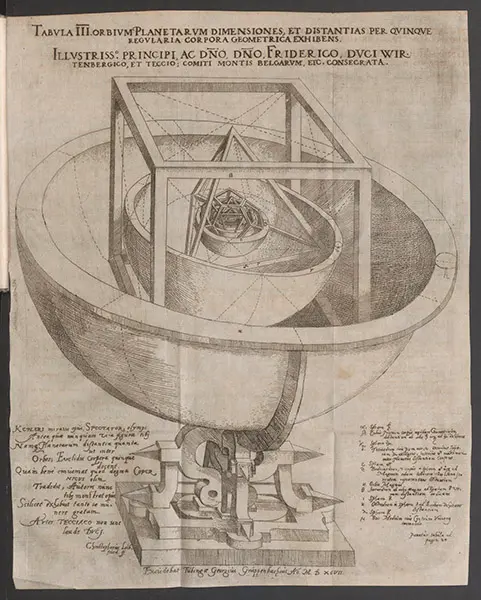
7. A Static, Closed and Singular Universe
To accept the logical premises of New Foundations (NF) is to affirm the existence of the Universal Set ($V$) and reject the hierarchy of types as an ontological reality. This commitment forces us to abandon the comfortable metaphysics of the "Iterative Conception." The standard orthodoxy, championed by George Boolos and codified in Zermelo-Fraenkel (ZFC) set theory, views reality as a construction project. In this view, sets are formed in stages, building up from nothing to infinity over a "quasi-temporal" sequence (Boolos 1971, 220-222).
The Substance Monism of NF rejects this creative genesis. In the Monist universe, objects are not built; they are defined. If a description is stratified and obeys the syntactic symmetry of the universe, the object exists instantly and eternally. This shifts our metaphysics from a dynamic process of becoming to a static architecture of being.
7.1. The Rejection of Expansion
In the ZFC orthodoxy, the universe is indefinitely extensible. If you attempt to collect everything into a single set, logic forces you to create a new object—the set of all those things—that sits outside your collection. The universe expands to include it. This is the open universe: an infinite hierarchy with no ceiling.
Quine’s logic, however, describes a universe that is Closed. Because the universe of NF is a "complete boolean algebra" (Holmes 1998, 12), there is no outside. If you take any part of the universe, the complement (the rest of reality) is also a valid, existing set inside the universe (Quine 2009, 229). As Quine notes in his dictionary of philosophical concepts, the universe is a single, self-contained substance where "everything that is, is in God, and nothing can be, or be conceived, without God" (Spinoza 1677, 14). In set-theoretic terms: $ V \in V $. The universe contains itself.
7.2. The Identity of Indiscernibles
This closure comes at a specific price: the collapse of distinct identity. In a universe that is a "Tangled Web" of symmetries (Holmes and Wilshaw 2025, 3), we lose the ability to distinguish objects by their location in a hierarchy. If the Axiom of Choice fails—as it must in the "diabolical" models required to sustain NF—we cannot arbitrarily select one object from a set of identicals (Lewicki 2020, 5). This vindicates Spinoza's metaphysical axiom: "In the universe there cannot be two or more substances of the same nature or attribute" (Spinoza 1677, 5).
In NF, if two objects are structurally symmetric to the point where no stratified function can distinguish them, their identities begin to merge. We are left with a universe that is not a collection of distinct, countable marbles, but a Hall of Mirrors where every object is a reflection of the Whole.
7.3. The Cantorian Accommodation
If Monism is true, why does standard physics (based on ZFC) work so well? The field has maintained an intellectual compromise called "The Cantorian Accommodation."
The argument is that ordinary mathematics (calculus, quantum mechanics) takes place entirely within "Small Sets"—sets where the Axiom of Counting holds (Holmes 1998, 155-159). This position effectively says: "ZFC is wrong about the Universe, but it is right about the atoms."
This creates a fracture in modern thought: Substance Dualism in practice. We use NF for the Whole (Logic) and ZFC for the Parts (Physics). But this quarantine is impossible. Logic is holistic. If the Universe ($V$) fails the Axiom of Choice globally, this failure must percolate down to the vacuum state itself. We cannot treat the diabolical nature of reality as a high-level abstraction. It must be visible everywhere—manifesting as the "Dark Energy" that pervades the void.
8. The Productive Type Error
To understand why the universe is stratified in this way, we must move from physics to metaphysics. Why does the universe exist at all? In the Monist framework, existence is not a "Bang" but a Callus.
8.1. The Pearl Metaphor
A Type Error is usually seen as a mistake. In Substance Monism, it is the generative mechanism. A Type Error is productive in the same way a grain of sand is productive in an oyster. It is an irritant.
If the universe were unstratified (Flat), it would instantly generate Russell's Paradox ($ R = { x \mid x \notin x } $) and collapse into non-existence. To survive its own definition, the Universe curls away from the contradiction, imposing stratification (Types). The "Universe" we see—the layers of atoms, fields, and galaxies—is the scar tissue that forms over the wound.
We exist only because the Absolute ($V$) had to twist itself into a hierarchy (Types 0, 1, 2...) to avoid canceling itself out. The world is just the scaffolding required to keep $V$ consistent.
9. Physical Analogues
The shift from the iterative logic of ZFC to the static logic of NF mirrors the shift in physics from Newtonian time to the Einsteinian Block Universe.
9.1. Time as a Coordinate
In the "Iterative Conception," time is fundamental. Sets are formed at stages (Boolos 1971, 492). In New Foundations, stratification is not a history of formation, but a grammatical rule of simultaneous existence (Holmes 1998, 44, 51-53). This corresponds to the four-dimensional space-time manifold described by Quine, where "time is a dimension on a par with the spatial ones" (Quine 2009, 198).
Just as Quine argues that "people and other things of the past and future are as real as those of today" (Quine 2009, 74), the NF universe posits that all logical definitions exist simultaneously. The universe does not unfold; it is a static crystal. This suggests a deep, perhaps causal, link between the logical necessity of stratification and the experiential reality of time's passage.
9.2. The Holographic Limit
The most striking physical analogue to the diabolical logic of NF is the Holographic Principle in black hole thermodynamics. In standard physics (and standard ZFC), we assume that the interior (volume/subsets) can always hold more information than the boundary (surface/set).
However, in the Monist universe, Cantor's Theorem ($|A| < |\mathcal{P}(A)|$) fails for the Universal Set (Holmes 1998, 130). The power set (the interior complexity) cannot be larger than the "universal set" (the boundary). This is the "Holographic Bound": the information content of the universe is constrained by its boundary conditions.
We live in a Pac-Man cosmology: a closed manifold, likely a 3-Torus, where traveling far enough in any direction brings you back to the start. It is a universe that is efficient, finite, and absolute. The infinite is just a trick of the light in a house of mirrors.
10. Speculative Cosmogony
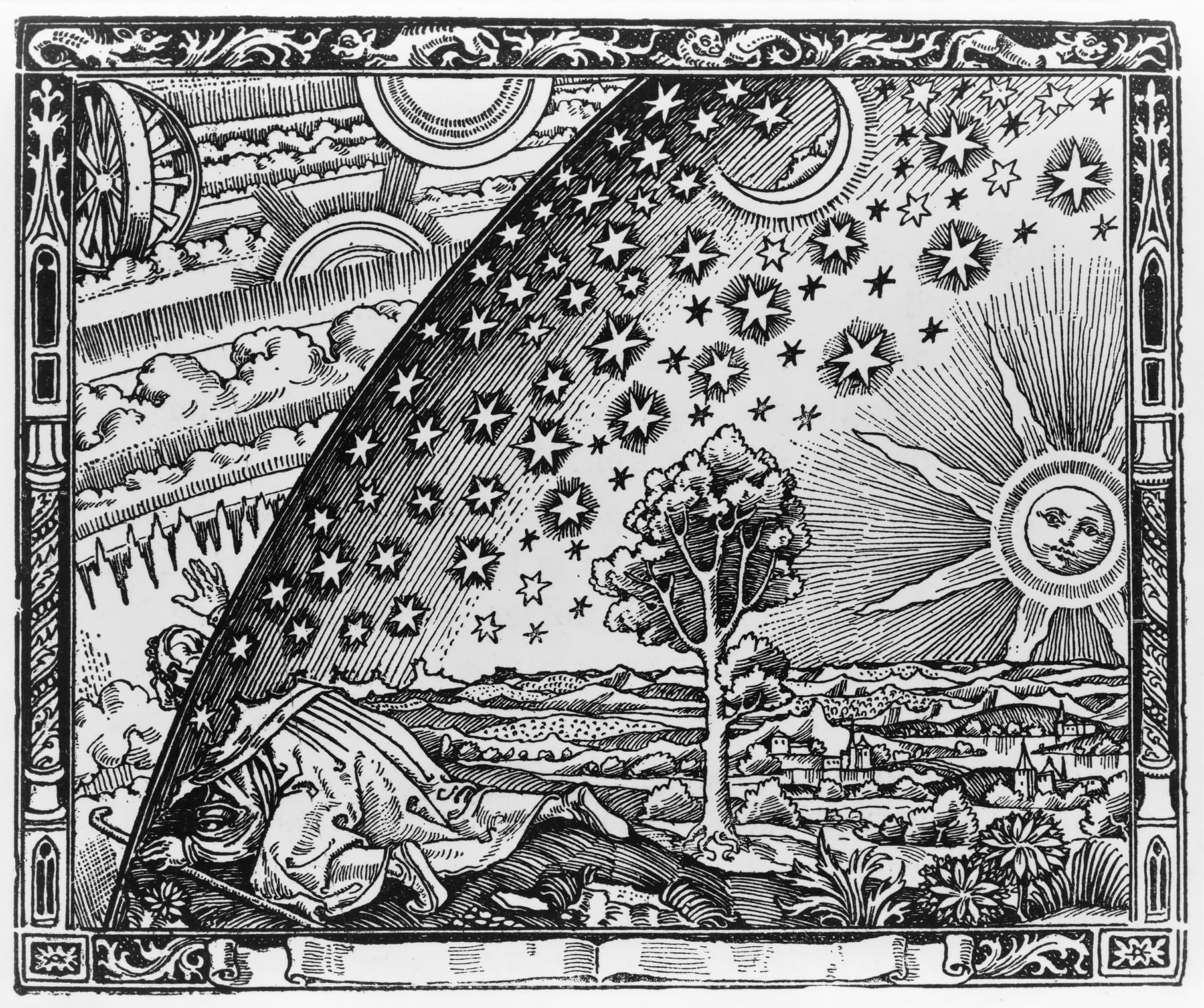
The absence of a Big Bang demands a new etiology for light. If there was no initial explosion to light the match, where did the photons come from?
Diagnosis: Light is the friction of Stratification.
Standard physics posits that light is released when an electron drops from a high energy state to a low one. Monist physics reinterprets energy states as Logical Types.
The universe is composed of layers, but these layers do not float apart; they are the same Substance trying to occupy the same space. When an object (a truth/set) tries to move between types—when the One tries to relate to the Many—it encounters resistance. This mismatch creates ontological friction. The vacuum energy (Dark Energy) grinds against the structure of matter, releasing pure information in the form of photons.
Stars are not merely fusion reactors; they are puncture points in the logical manifold. They are places where stratification is under such intense pressure that logic fails and bleeds energy. Light is the Cherenkov radiation of logic—the error message of a universe that is too full.
10.1. The Ghost Light
Addressing the classical problem of ex nihilo (Out of Nothing), the diabolical framework imposes a geometric solution: light originates not in energy, but in structure.
Accepting the Monist premise that the universe is a closed static block (a 3-Torus) requires abandoning the idea of a source that pours energy into the system. Instead, we must adopt the logic of the Bootstrap Paradox.
- The Mechanism: Imagine a photon traveling the great circle of a closed topology. It passes point A, travels the circumference of the universe, and hits point A again.
- The Paradox: If you ask, "Where did that photon come from?", the answer is: It came from its own future.
- The Source: The light is self-caused (Causa Sui). It does not have an origin in time. It has a trajectory in logic.
We are not warmed by a fire lit 13 billion years ago. We are warmed by a fire that is burning itself forever in a closed loop (Penrose 2010, 161). The source is the curvature of the cage.
If the universe is a closed box with no input, the light we see is akin to the echo of a first thought (The definition $V=V$). In a perfect cavity (The Universal Set), energy creates standing waves. Light is not generated now; it is the reverberation of the system's existence. As long as $V$ exists, it vibrates. The light is the hum of the machine that never turns off.
11. The Illusion of Expansion
Accepting the diabolical premise of New Foundations means accepting that the Universal Set ($V$) is the single, static substance of reality. This confronts us with the immediate, glaring contradiction of modern astrophysics: The Expansion of the Universe.
The Lambda-CDM consensus asserts that the universe is an open system, inflating like a balloon, driven by a dark energy we cannot explain. It is a universe of becoming.
Quine's Monist Logic, conversely, describes a universe of being. It is a block universe—finite, closed, and eternally stratified.
To reconcile the static logical block with the observed exploding star, we must shift our geometric perspective. We must enter the House of Mirrors. Expansion is not a physical motion of galaxies, but a geometric illusion caused by the curvature of the universal set itself.
11.1. The Closed Manifold
The standard interpretation of Redshift ($z$) is the Doppler Effect: galaxies are red because they are moving away. However, in a Monist universe, there is nowhere to move to. The universe is a closed manifold—a geometric cage with no exit.
Irving Ezra Segal’s Chronometric Cosmology provides the mathematical architecture for this static cage. Segal argues that the universe is not expanding; rather, our local measurements of time and energy are distorted by the global curvature of the cosmos.
"The redshift is simply the difference between the 'local' energy (measured in the tangent space) and the 'global' energy (conserved in the conformal group)." (Segal 1976, 75)
This aligns with Jean-Pierre Luminet’s work on "Wraparound Universes" (Cosmic Topology). Luminet visualizes a dodecahedral universe where light wraps around the closed manifold, creating ghost images of the same galaxy in different directions.
In the Monist view, a photon traveling from a distant galaxy isn't stretched by expanding space. It is climbing out of the gravity well of the Universal Set. The farther you look, the more layers of stratification (geometry) the light must traverse, losing energy at every step. We see recession, but we are actually looking at curvature. What we mistake for an endless void is a House of Mirrors where the same few objects are reflected infinitely by the closed geometry of the Universal Set.
11.2. Tired Light and the Entropic Force
Historically, this was dismissed as "Tired Light"—the idea that photons simply get exhausted. Fritz Zwicky proposed this in 1929 to explain the data without abandoning a static universe:
"The redshift... [may be] due to an interaction of light with matter in the vast spaces between the galaxies... a gravitational drag." (Zwicky 1929, 773)
While Zwicky lacked the mechanism, modern holographic theory provides it. Gravity and space are not fundamental; they are emergent.
Erik Verlinde’s work on Entropic Gravity suggests that what we call "Dark Energy"—the force pushing the universe apart—is actually an entropic reaction. The universe resists the information density of matter.
"Gravity is explained as an entropic force caused by changes in the information associated with the positions of material bodies." (Verlinde 2011, 1)
In the Monist Cosmology, dark energy is not a mysterious fluid filling the void. It is the elastic limit of the universal set—the system's structural refusal to pack infinite information into a finite volume. The universe appears to accelerate not because it is growing, but because the information cost of defining new space is increasing.
11.3. The Killer Anomaly: Time Dilation
Any Monist Cosmology must survive the Goldhaber Test. In 2001, the Supernova Cosmology Project confirmed that distant supernovae don't just look redder; they look slower. Their explosions take longer to happen from our perspective.
"The timescale width factor w [is] consistent with the time dilation expected from an expanding universe... $ w = (1 + z) $." (Goldhaber 2001, 1; Segal 1976, 85)
This kills simple Tired Light theories (which redden light but don't slow clocks). But it does not kill the Monist block universe. If the universe is a stratified causal set (Sorkin 2003), then time is just a count of causal links (Stratification Level). When we look deep into the past, we are looking at a region of the universal set with a different Stratification Density. The slow motion of the supernova is not kinematic; it is structural. It is a symptom of aliasing.
11.3.1. The Observer as Artifact
This leads to a distinct implication of Monist physics: our perception of time is a compression artifact.
In signal processing, if you try to display a high-resolution video on a low-resolution screen, you get "aliasing"—visual glitches, moiré patterns, and lag. The Monist model suggests that we are the low-resolution screen.
The Supernova is vibrating faster than your reality can update; if you tried to watch it in "raw" mode, it would look like random noise. To resolve this, the universe downsamples the signal through conformal redshift. This is the logical equivalent of Segal’s chronometric model, where light redshifts due to the difference between the global time of the universe and the local time of the observer. In Monism, Segal's global time is simply the type of the universal set. The supernova exists at Type 1 (the quantum event) and the observer at Type 3 (the macroscopic aggregate). Redshift is the conversion cost of translating a high-type signal (Global) into low-type coordinates (Local). You perceive this translation cost as the object struggling to reach you, losing energy (Redshift) and slowing down (Time Dilation).
What we perceive as time dilation—the slowing down of distant events—is actually the universe buffering. The difficulty light has in reaching us is not physical distance; it is the computational cost of translating a complex reality into a simple one.
The mechanism is mathematical. In NF, there is an operation called T (for Type) which maps numbers between types (Holmes 1998, 88). In the diabolical models constructed by Holmes, this function is not guaranteed to be one-to-one; it can distort as you move between types (Holmes 1998, 110-112).
- Let $n$ be the number of "ticks" on a clock at the distant supernova (Type 1).
- Let $T(n)$ be the number of "ticks" we measure here (Type 3).
If the operation $T$ is lossy, such that $ T(n) < n $, then for every 100 ticks that happen there, we might only measure 50 ticks here.
The Result: The distant supernova appears to move in slow motion.
This is not just a physical effect; it is a category-theoretic necessity. As demonstrated by Adam Lewicki (2020) and M. Randall Holmes (n.d.), the category of NF sets is not Cartesian closed. You cannot freely form function spaces (Bᴬ) across types without shifting the type index.
Standard physics says the supernova slows down because space is expanding. Monist theory says it slows down because type-shifting is lossy. As the information of the supernova moves from Type 1 (Event) to Type 2 (Light) to Type 3 (Observer), the Frame Rate $T(n)$ drops. The universe cannot compute the full function space of the distant event at our local level, so it compresses the data.
The universe is not slow; we are. The Laws of Physics we measure are just the compression artifacts of our own blindness.
12. Falsifiability
A philosophical theory that cannot be wrong is sterile. If "Substance Monism" is merely a poetic redescription of standard physics, it is a redundancy. To survive, the Monist model must connect its logical claims to the physical world, making predictions that diverge from the standard ZFC-based model.
12.1. The Universality of Redshift
Skepticism is warranted. It appears as a magical coincidence that a theory about logical integers (Type 0, Type 1, Type 2) would reproduce the exact continuous curves of astrophysics (Redshift $z$, Hubble Constant $H0$).
In modern physics, however, this coincidence is named Universality.
The theory does not "know" the correct limits ahead of time. Instead, any system that is holographic and scale invariant will mathematically converge to the same specific behaviors, regardless of whether it is built out of strings, pixels, or logical sets. It enforces the correct limits because, geometrically, they are the only stable limits available.
12.1.1. Renormalization Group Flow
Imagine pouring different liquids (water, oil, syrup) into a massive funnel. By the time they reach the bottom, they all flow in a similar spiral. The shape of the flow is determined by the funnel (geometry), not the liquid (micro-details).
Think of New Foundations (NF) logic as the liquid—a discrete, integer-based system—and the Holographic Bound as the funnel. As you scale up from Type 1 (quantum) to Type 3 (macroscopic), the specific details of the integers wash out, and the system flows toward a fixed point. The only mathematical way to compress information in a 3D volume onto a 2D surface is via an inverse-square law ($ 1/r^2 $).
NF did not guess the inverse-square law. Inverse-Square is the only solution to the problem, "How do I pack a volume into an area?"
12.1.2. Limits
Why aren't the limits random? Why doesn't light decay by half every meter? The limits are constrained by Discrete Scale Invariance (DSI).
Since the NF universe is built of types (integers), it must look the same at Type 1 as it does at Type 2, and Type 3. This symmetry forces the physical laws to follow a Power Law. A wildly different limit (like an exponential decay) would break the symmetry. The correct limit (Redshift) is simply the power law that survives the symmetry requirement.
12.2. Impossible Efficiency
A theory’s strength is measured by its ability to metabolize contradictory data. The initial discoveries by the James Webb Space Telescope of unexpectedly bright early galaxies presented a direct challenge to the standard Lambda-CDM timeline (Yung et al. 2019, 2983), creating a Mass Crisis. The initial Monist argument was that these galaxies were "too massive, too early," proving the universe must be eternal.
Subsequent analysis has provided an orthodox resolution that is far more revealing. The extreme brightness of these "Little Red Dots" is not from an impossibly large number of stars, but from gas swirling into supermassive black holes (Active Galactic Nuclei) (Wang et al. 2025, 2). Recent spectral analysis confirms these objects are unresolved point sources with bimodal energy distributions: blue in the ultraviolet, red in the optical. This indicates they are dominated by obscured black holes rather than stellar populations (Wang et al. 2025, 3). When this AGN light is subtracted, the estimated stellar mass drops significantly, and the "crisis" of size is canceled.
For the Monist, however, this resolution exposes a deeper structural anomaly. The Crisis of Mass has simply been replaced by a "Crisis of Efficiency."
- The Efficiency Anomaly: To make the models fit the observed data, astrophysicists must now admit that the early universe was significantly more efficient at creating structure than the modern one. New data from the CEERS survey reveals that the baryon-to-star conversion efficiency ($ \varepsilon $) is not constant. It remains low ($ \varepsilon \leq 0.2 $) at $ z < 3 $ but enters a phase of rapid growth at higher redshifts, reaching $ \varepsilon \sim 0.3 $ for massive galaxies at $z \sim 7$ (Chworowsky et al. 2024, 12).
- The Black Hole Nucleation: The population of the early universe by compact red dots dominated by black holes aligns with Entropic gravity. If gravity is the entropic force containing the logical tension of the vacuum, then black holes are the Nucleation Points of the stratification. Their prominence at high redshifts is not an anomaly but a direct observation of the raw nodes of the universe's causal graph.
- The "Top-Heavy IMF" Anomaly: The new models also suggest a "Top-Heavy Initial Mass Function"—that the early universe disproportionately produced massive stars over smaller ones (Dekel et al. 2023, 1; Chworowsky et al. 2024, 13). From a Monist perspective, this points to a deep structural issue in how reality distinguishes between One and Many at cosmological scales. At higher logical types (the early universe), the very notion of a countable unit appears to behave differently. This aligns with findings that high-z galaxies deviate significantly from linear mass-to-light relations (Wang et al. 2025, 8), implying that our standard methods for counting mass from light break down at the horizon.
- The Monist Interpretation: In our framework, Efficiency is a function of Stratification (mirrored physically by the Feedback-Free Starbursts predicted at high densities by Dekel et al. 2023, 1). As we look deeper into the Universal Set (higher $z$), the Information Density increases to satisfy the Holographic Bound. The "higher efficiency" is geometric; the universe must pack more activity into smaller volumes at the boundary. Redshift is not just a shift in light; it is a shift in Process Speed.
12.3. Progenitor Age Bias
If the universe is a static block, why does it appear to be accelerating apart? For decades, the accelerating universe has been the bedrock of modern cosmology, necessitating the invention of Dark Energy to explain why distant Type Ia supernovae appear fainter (and thus further away) than they should be in a coasting universe.
A diabolical analysis suggests this acceleration is not a property of space, but a failure of our ability to count time correctly across strata. New research on "Progenitor Age Bias" provides the physical mechanism for this illusion. The standard model assumes Type Ia supernovae are "Standard Candles"—uniform light bulbs of constant brightness. But recent analysis aligns with the Monist view that objects at different logical depths (ages) behave differently.
A landmark study by Son et al. reveals that the luminosity of a supernova depends on the age of its stellar progenitor. Younger stars produce fainter explosions, and because star formation evolves over cosmic history, the supernovae we see at high redshifts are systematically younger (and thus fainter) than those nearby. When this "Age Bias" is corrected—effectively normalizing for the logical type of the star—the evidence for cosmic acceleration vanishes (Son et al. 2025, 975). The data becomes consistent with a constant expansion rate or even a non-accelerating universe. We do not need Dark Energy to push the universe apart. We simply needed to realize that time (Progenitor Age) is a variable that alters the physical properties of matter. The universe isn't expanding faster; we were just measuring it with a ruler that shrinks the further back you look.
12.4. The Temperature of the Universal Set
The ultimate test of the Monist Universe is found by treating its central claim—that the Universal Set ($V$) is a real, bounded object—not as a metaphor, but as a physical fact. If the universe is bounded, it must obey the thermodynamic limits of all bounded systems.
Jacob Bekenstein demonstrated that the maximum entropy ($S$) a finite region of effective radius ($R$) can contain is bounded by its energy ($E$), such that $ S/E < 2\pi R $. This gives us the formal Bekenstein Bound (Bekenstein 1981, 287):
$$
S \leq \frac{2 \pi k R E}{\hbar c}
$$
...where $k$ is the Boltzmann constant, $\hbar$ is the reduced Planck constant, and $c$ is the speed of light.
The interpretation of this bound marks the crucial split between the two cosmologies:
- In ZFC-based physics (Inflation), the universe is effectively infinite, so this bound is merely a local limit that applies to black holes.
- In NF-based physics (Monism), the universal set is a bounded system, and the Bekenstein Bound must apply to the entire cosmos.
This allows us to assign a thermodynamic temperature to the Universal Set itself. In the Monist view, the Cosmic Microwave Background (CMB) is not the afterglow of an explosion; it is the Hawking radiation of the universal boundary.
- The Test: We can calculate the Bekenstein temperature of a generic universal set defined by the Hubble Horizon. If this value deviates significantly from the observed CMB temperature of 2.725 K, the Monist model is falsified.
This test serves as the hard wall against which the theory must be thrown. It translates the abstract horror of a self-contained universe into a number that can be checked. This macroscopic test of the Universal Boundary is not the only avenue for falsification; the logical peculiarities of a Monist universe suggest equally radical predictions at the quantum scale, where the very act of counting is called into question.
13. Eternal Recurrence
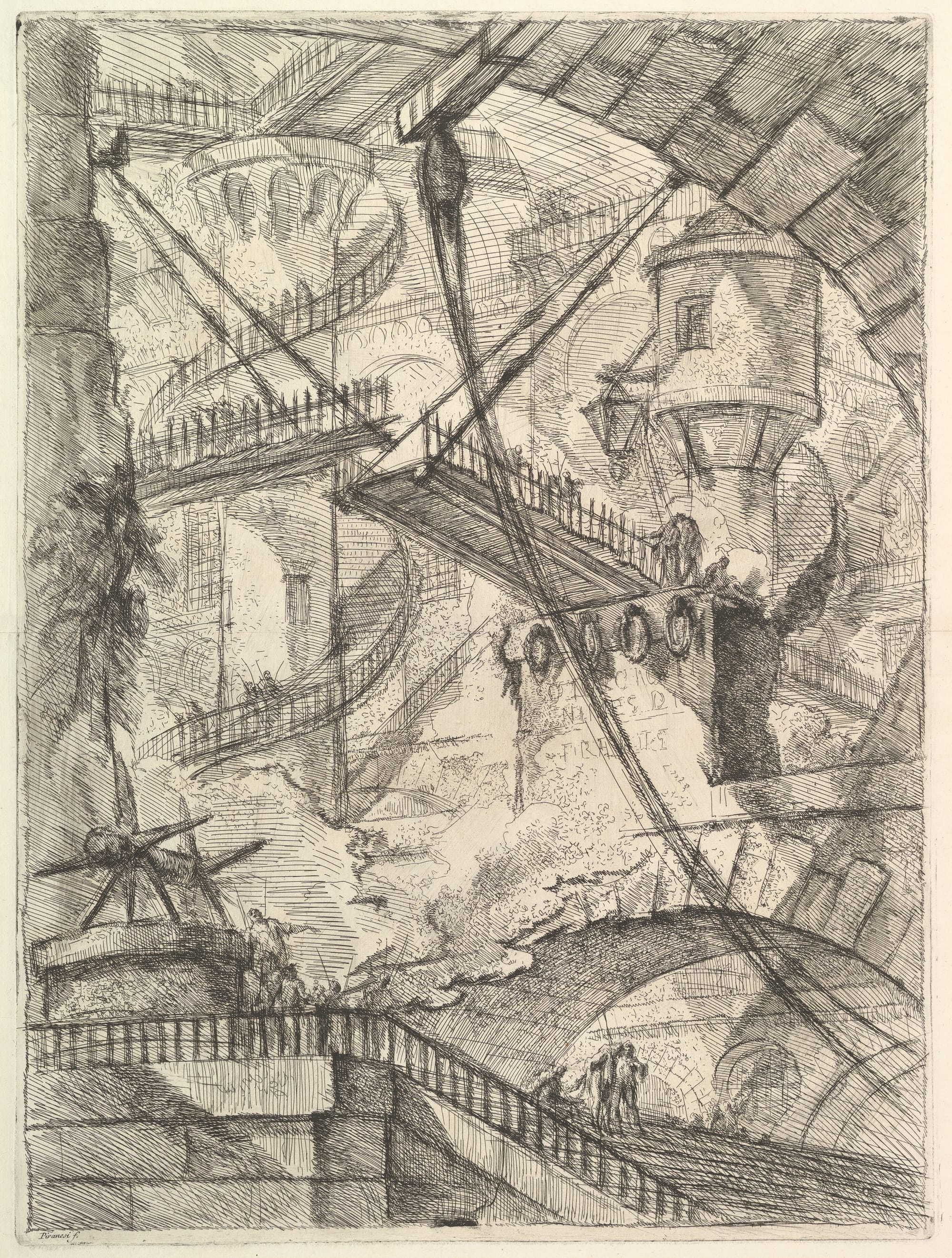
Standard physics (ZFC) predicts Heat Death: the universe expands until it is cold, dark, and empty. Monist physics (NF) predicts eternity and repetition.
Because the universe is a Closed Manifold—a topologically bounded system—with finite energy, it cannot expand forever into nothingness. It must eventually cycle through all possible states and repeat. This validates Nietzsche’s eternal recurrence.
We are caught between two unforgiving fates:
- The ZFC Fate: We face extinction (fading away into the void).
- The Monist Fate: We face prison (being trapped in a loop of exact repetition).
In the Monist universe, nothing is ever truly lost, but nothing is ever truly free. We are locked in a crystal that cycles forever.
14. No Escape from the Whole
The sociological application of Substance Monism is a diagnosis of encapsulation. The Utopia—whether theist or secular—is a topological error. It relies on a logic of separation that the universe does not possess.
14.1. The Conservation of Refuse
The theist ("Get rid of sin") and the secularist ("Get rid of waste") share a ZFC-based delusion: the delusion of the Exterior. They operate on the assumption that signal (Good/Sustainable) can be separated from noise (Bad/Waste), and that the noise can be flushed into a void.
The Monist Reality: In a Closed Universe ($ V \in V $), there is no void. There is no outside for the carbon, the plastic, or the sin. Corruption is not an accident to be corrected; it is the unassimilable substrate of the system. We cannot get rid of the waste; we can only stratify it. The future is not a clean room; it is a pressurized submarine. We are proceeding with the confidence of a CEO in a carbon-fiber hull, convinced that the crushing weight pressing in on us is just another regulation to be disrupted.
14.2. The Impossibility of Accommodation
The fantasy of living peacefully and providing exactly what we need is a fantasy of perfect calculation. It requires the Axiom of Choice (to match Supply and Demand perfectly) and the Axiom of Counting (to inventory needs). Since the Monist universe forecloses these axioms at the global scale, a perfect economy is structurally impossible. There will always be a mismatch. There will always be a remainder.
The pressure we feel—stress, anxiety, accelerationism—is not merely psychological; it is the entropic stress of the vacuum. It is the sensation of the universal set closing in.
References
Barro, G., et al. 2024. "Extremely Red Galaxies at z = 5–9 with MIRI and NIRSpec: Dusty Galaxies or Obscured Active Galactic Nuclei?" The Astrophysical Journal 963: 128.
Bekenstein, J. D. 1981. "Universal upper bound on the entropy-to-energy ratio for bounded systems." Physical Review D 23 (2): 287–298.
Boolos, George. 1971. "The Iterative Conception of Set." In Logic, Logic, and Logic, 13–29. Cambridge, MA: Harvard University Press.
Chworowsky, Katherine, et al. 2024. "Evidence for a Shallow Evolution in the Volume Densities of Massive Galaxies at z = 4–8 from CEERS." The Astronomical Journal 168 (3): 113.
Dekel, A., et al. 2023. "Efficient formation of massive galaxies at cosmic dawn by feedback-free starbursts." Monthly Notices of the Royal Astronomical Society 523 (3): 3201–3218.
Goldhaber, G., et al. 2001. "Timescale Stretch Parameterization of Type Ia Supernova B-band Light Curves." The Astrophysical Journal 558 (1): 359.
Holmes, M. Randall. 1998. Elementary Set Theory with a Universal Set. Louvain-la-Neuve: Academia.
Holmes, M. Randall, and Sky Wilshaw. 2025. "New Foundations is consistent." Zeramorphic.
Holmes, M. Randall. n.d. "Category theory in TST(U) and NF(U)." Unpublished manuscript.
Lewicki, Adam Vincent. 2020. Categories with New Foundations. PhD Thesis, University of Cambridge.
Penrose, R. 2010. Cycles of Time: An Extraordinary New View of the Universe. London: The Bodley Head.
Quine, W. V. 2009. Quiddities: An Intermittently Philosophical Dictionary. Cambridge, MA: The Belknap Press of Harvard University Press.
Segal, I. E. 1976. Mathematical Cosmology and Extragalactic Astronomy. New York: Academic Press.
Son, J., et al. 2025. "Strong progenitor age bias in supernova cosmology – II. Alignment with DESI BAO and signs of a non-accelerating universe." Monthly Notices of the Royal Astronomical Society.
Sorkin, R. D. 2003. "Causal Sets: Discrete Gravity." arXiv preprint gr-qc/0309009.
Spinoza, Benedict de. (1677) 2018. Ethics. Edited by Matthew J. Kisner. Translated by Michael Silverthorne and Matthew J. Kisner. Cambridge: Cambridge University Press.
Verlinde, E. 2011. "On the Origin of Gravity and the Laws of Newton." Journal of High Energy Physics 2011 (4): 29.
Wang, Tao, et al. 2025. "JWST/MIRI Reveals the True Number Density of Massive Galaxies in the Early Universe." The Astrophysical Journal Letters 988: L35.
Yung, L. Y. A., et al. 2019. "Semi-analytic forecasts for JWST – I. UV luminosity functions at z = 4–10." Monthly Notices of the Royal Astronomical Society 483: 2983–3006.
Zwicky, F. 1929. "On the Red Shift of Spectral Lines through Interstellar Space." Proceedings of the National Academy of Sciences 15 (10): 773–779.